
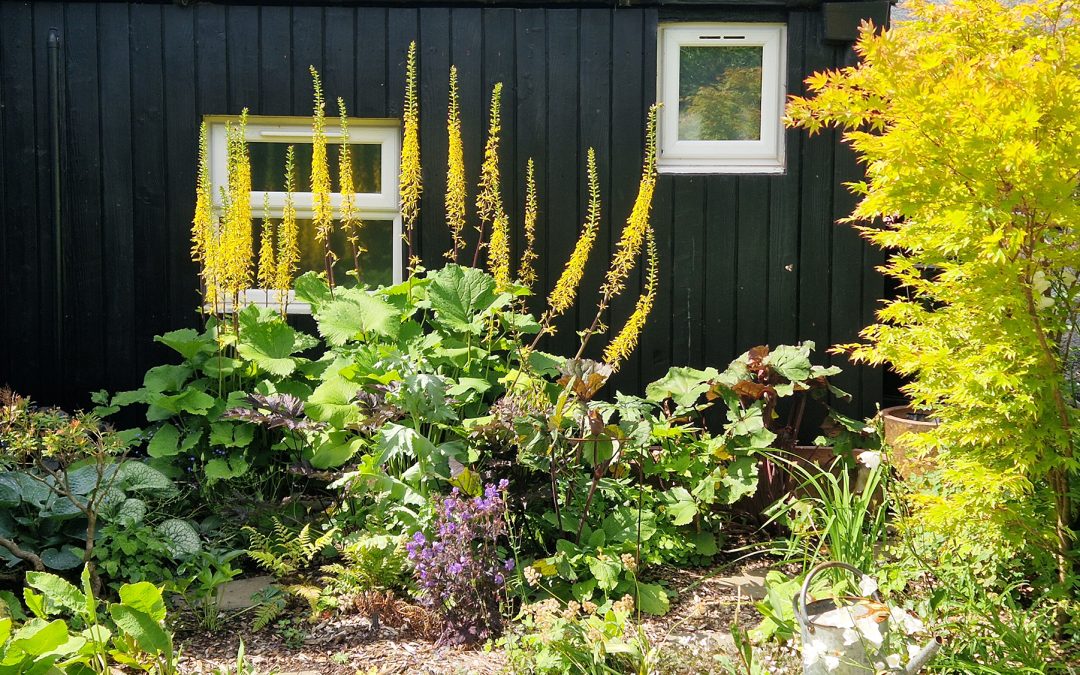
The garden by the kitchen…
Just to be clear, our garden by the kitchen is not a ‘kitchen garden’… it is a garden by the kitchen (-_-) but I still call it the Kitchen Garden.
A bit of background…
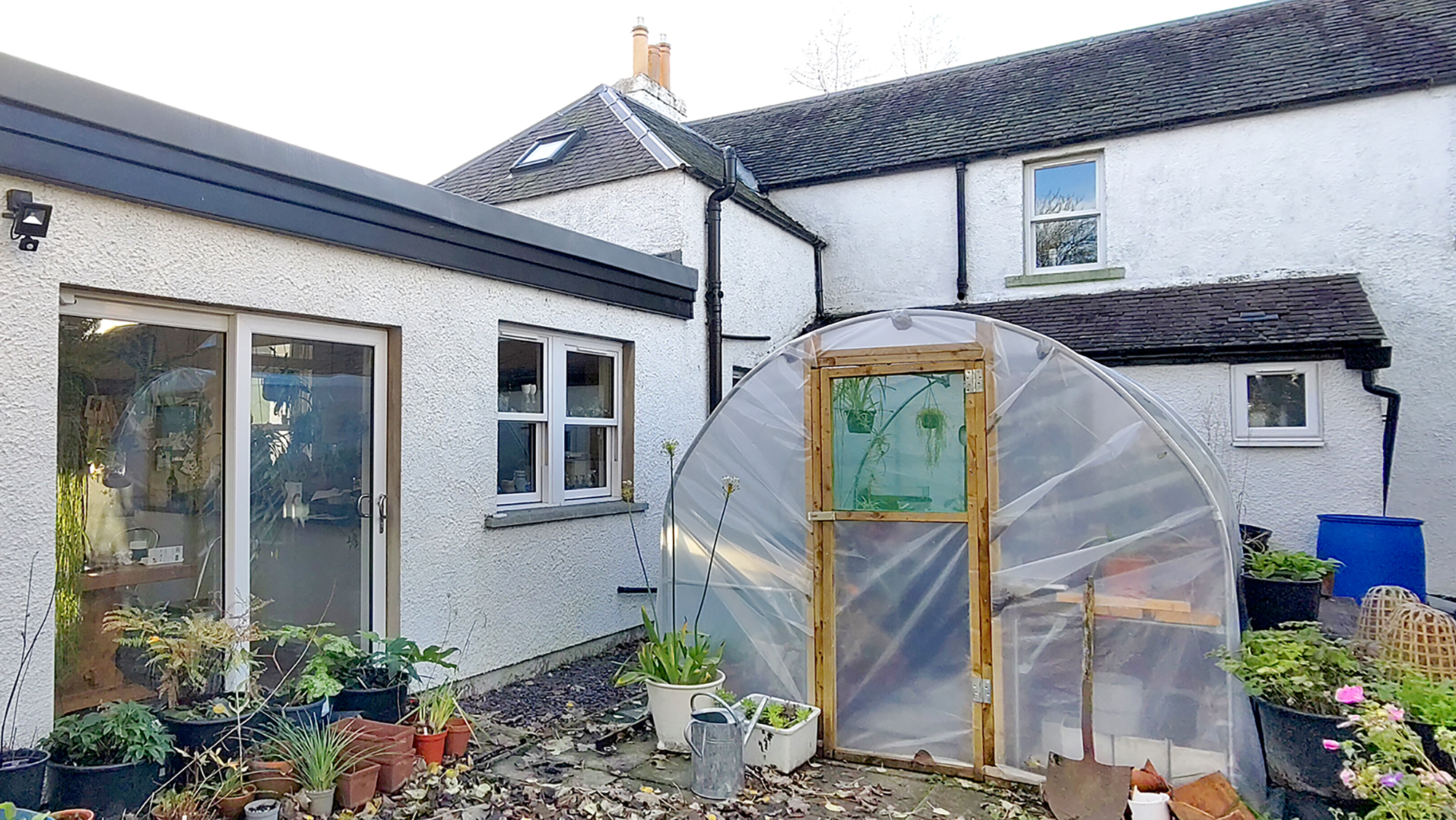
We moved to a cottage at the foot of the Pentlands in 2022. The cottage was built in 1780, initially as a weaver’s cottage (part of a development of weaver’s cottages). It was extended outwards and upwards in 1860, to become a Temperance Hotel, and was further extended in 1928. At some point, it has also been a shop, and possibly a post office. My studio is in the 1928 garage extension; it’s a wonderful space, although when we moved in, it was single brick, with a concrete floor and no insulation. The cottage was in a pretty poor state by the time the previous owners bought it, and it was partially renovated again in 20-teen’s. Finally, unwanted, it was hurriedly finished, and put on the market, we purchased it at the very end of 2021, and moved into it in February 2022.
I have been passing by this cottage on our way south since I was a small child, and I have always wanted to live in it!
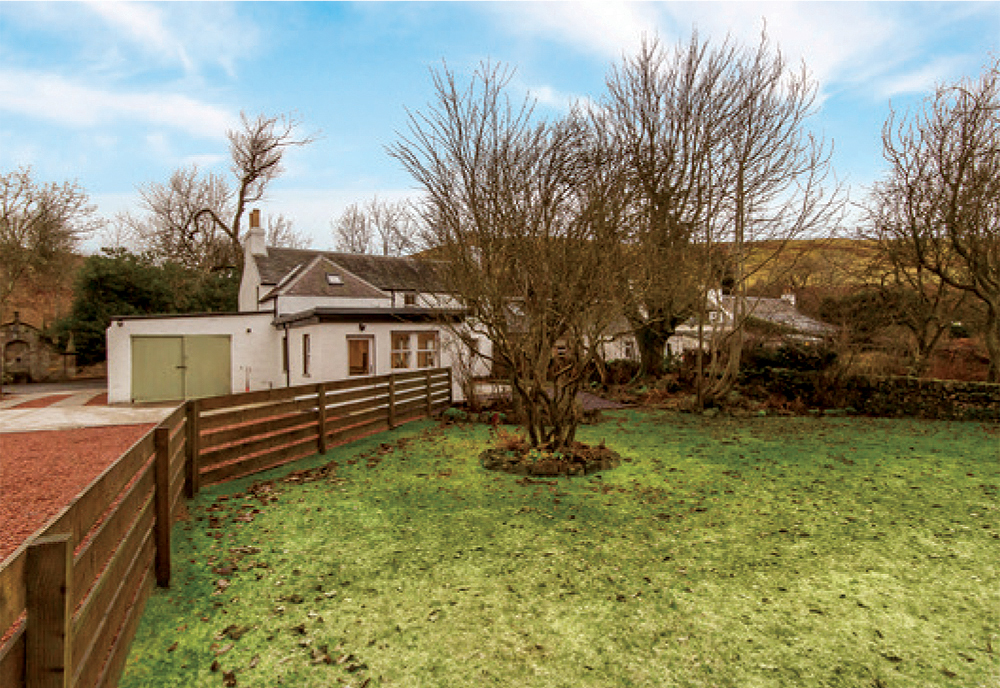
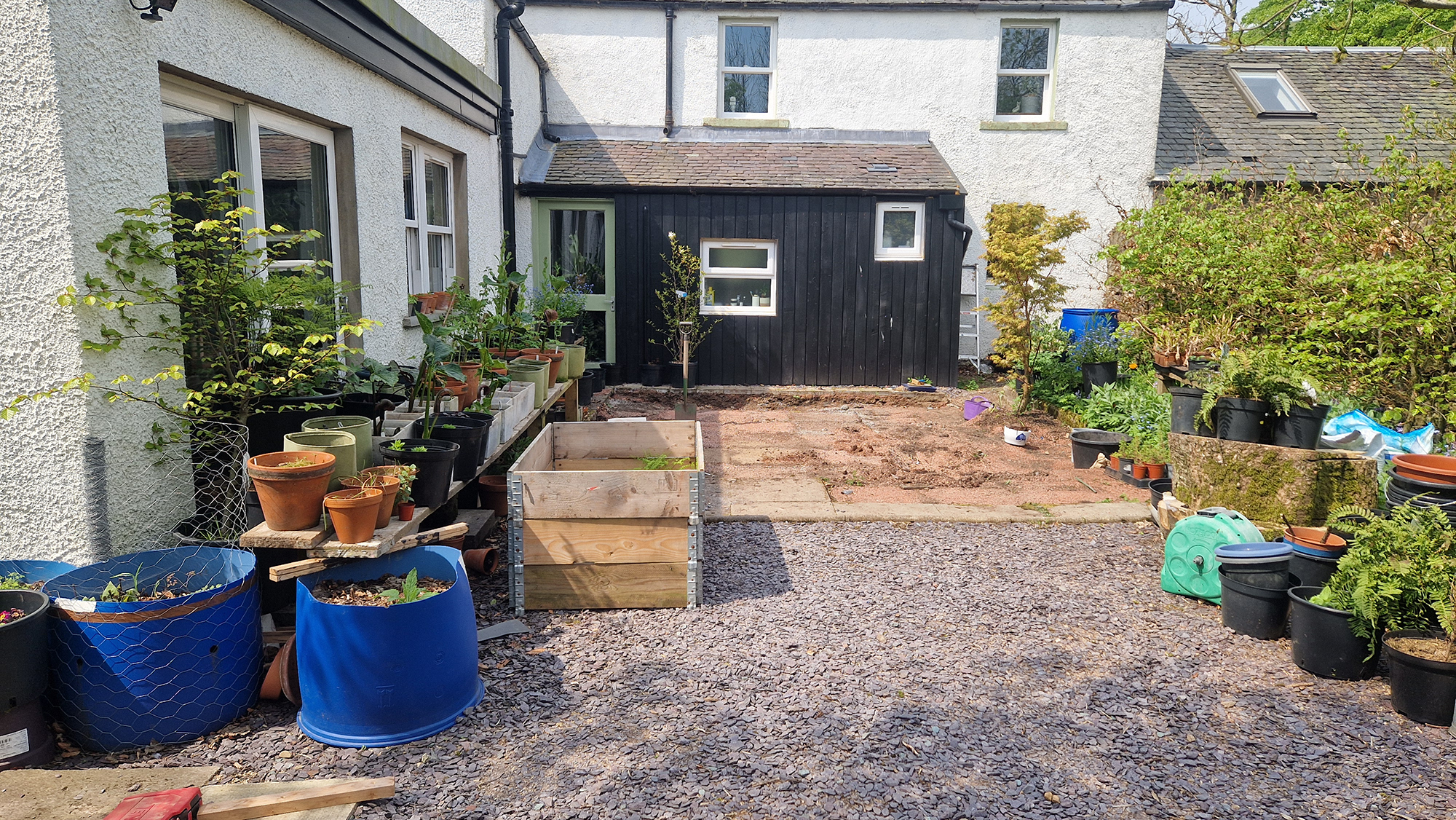
The garden, when we arrived in winter, was a bumpy lawn comprised mostly of creeping buttercup and dock, a very rotten sycamore that had been badly coppiced in the past, with many succours and saplings, some ash with die back, and a couple of lilacs. The landscaping consisted of some piles of rubble with Inula ‘Grandiflora’ and Comfrey growing through, masses of slate gravel, an awful red gravel drive with concrete hardstanding, and an uninspiring grey concrete patio beside the kitchen. It was snowing, we watched to see what would happen and got on with unpacking and doing inside jobs.
In the beginning…
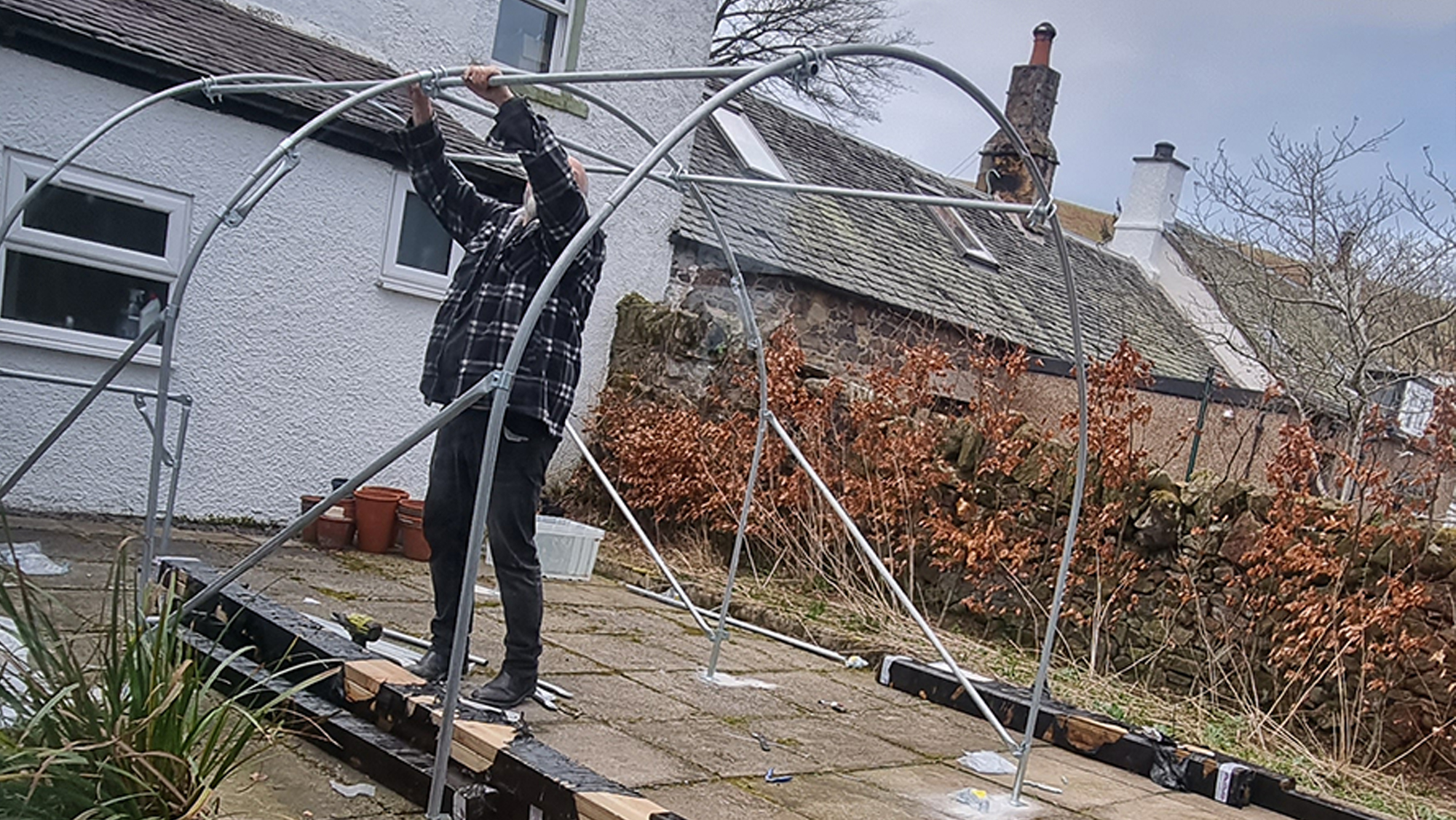
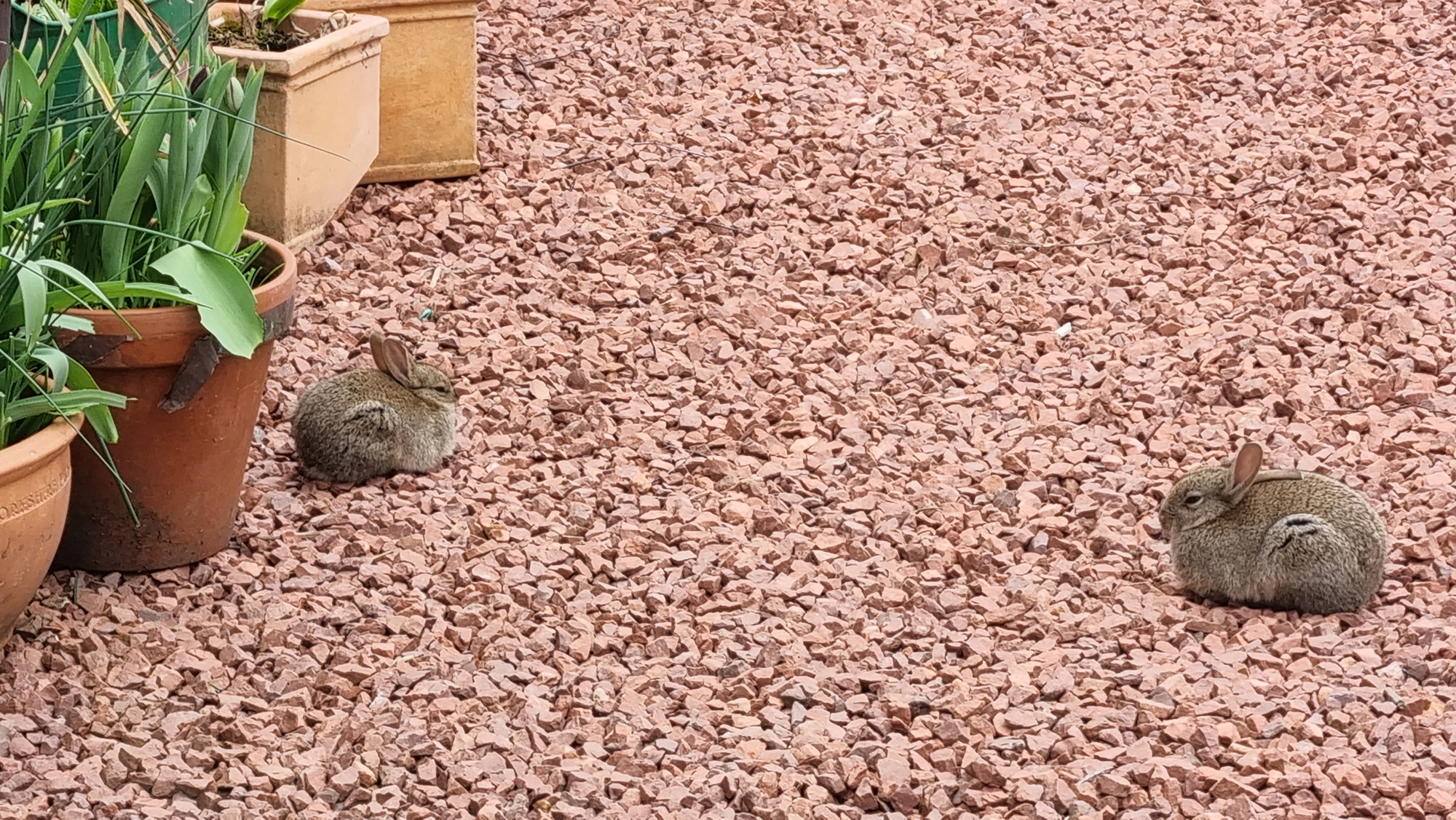
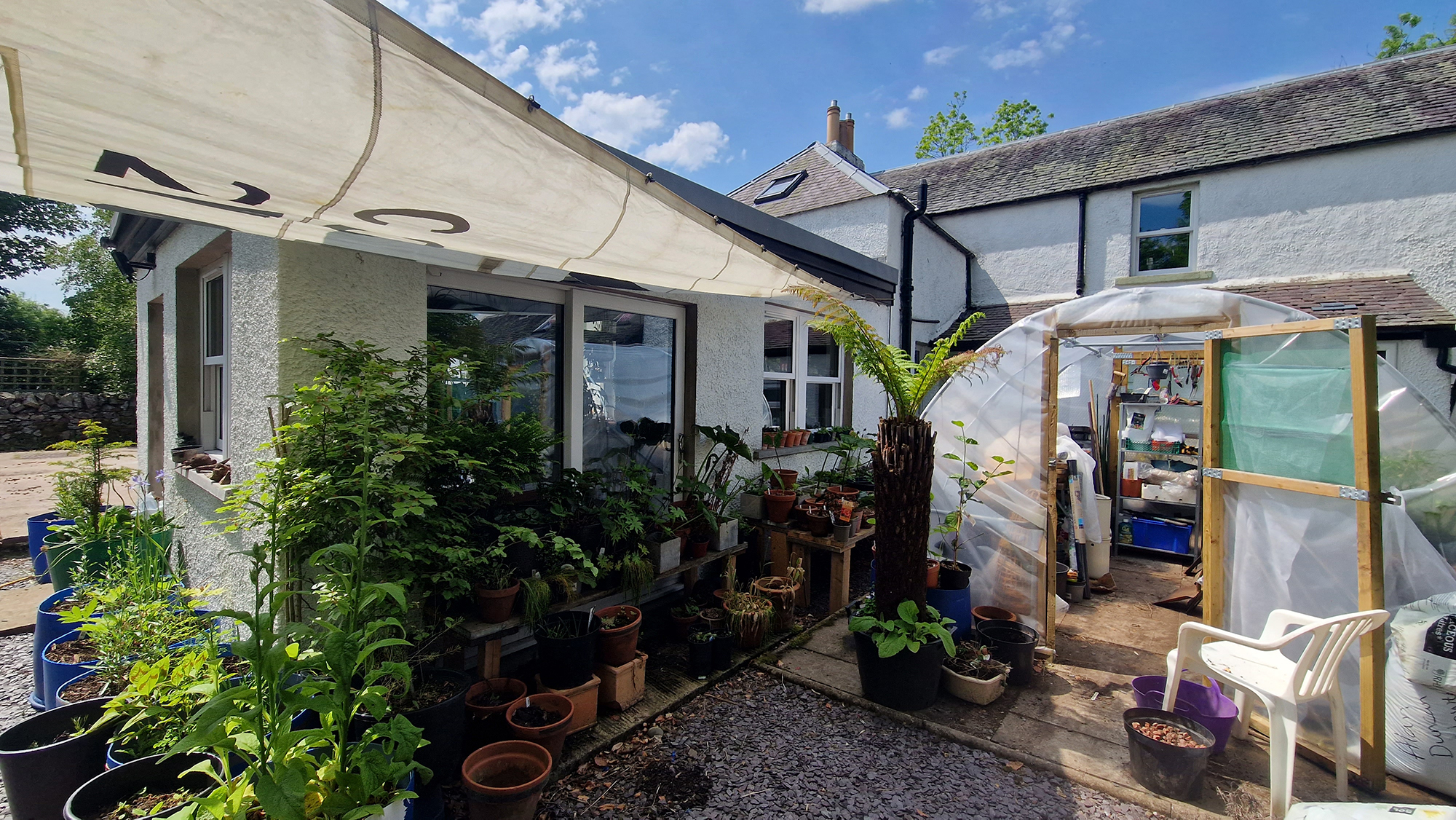
We observed the garden for about a year, and skirted around the edges to see what would happen, a family of rabbits introduced themselves and merrily gambled on the lawn. I soon learned to keep the precious things I had brought with me in pots at a height they couldn’t reach and eventually fortified all my pots with chicken wire. My first attack on the dock yielded a burnt saucepan buried beneath the lawn, the first of many interesting and not-so-interesting finds… Over months we discovered centuries of rubble and aluvial drop. Basically we have rocks, broken glass and ceramic and quite a lot of iron beneath the surface… We set up our new polytunnel on the patio by the kitchen, where it was protected from the worst of the winds.
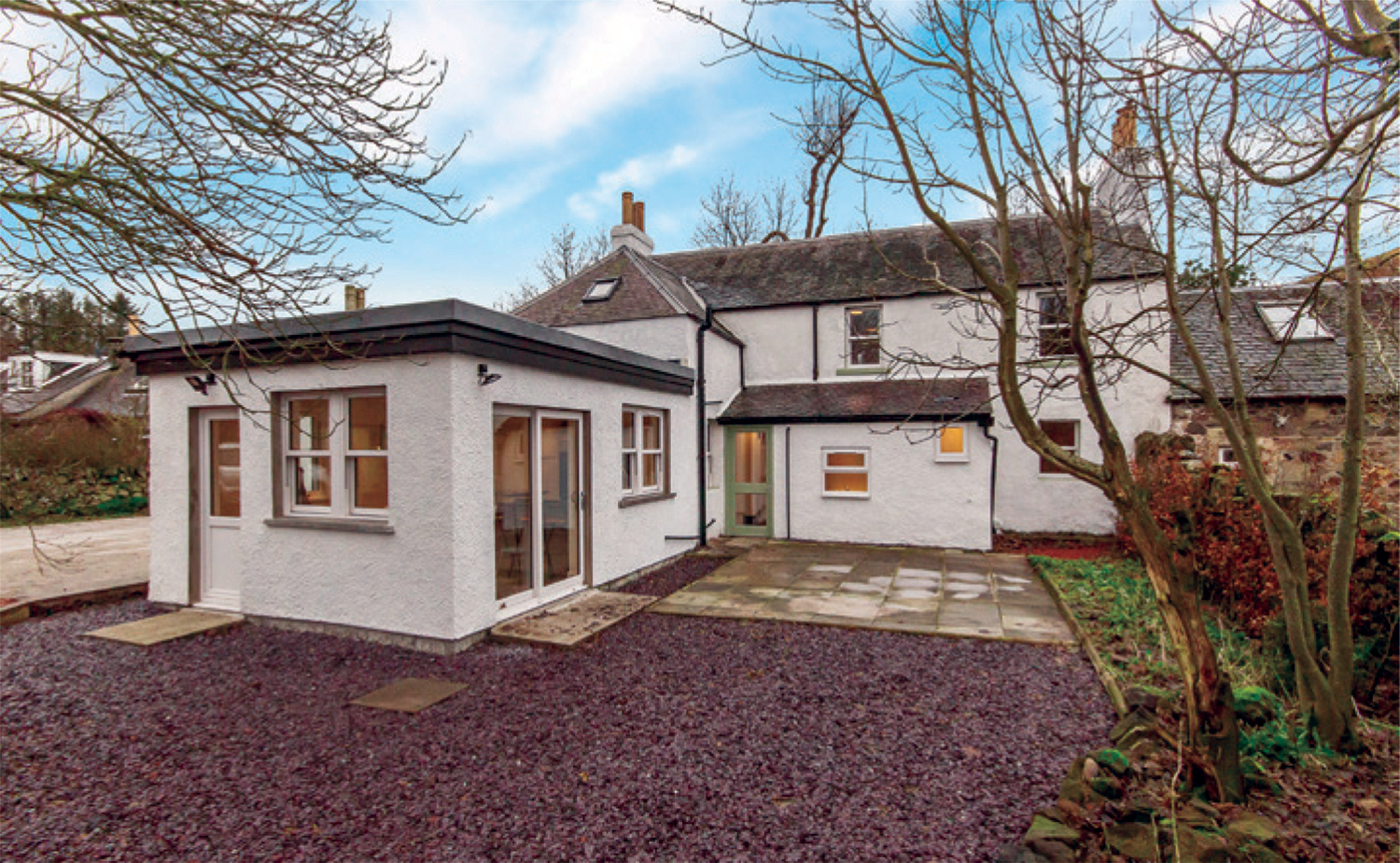
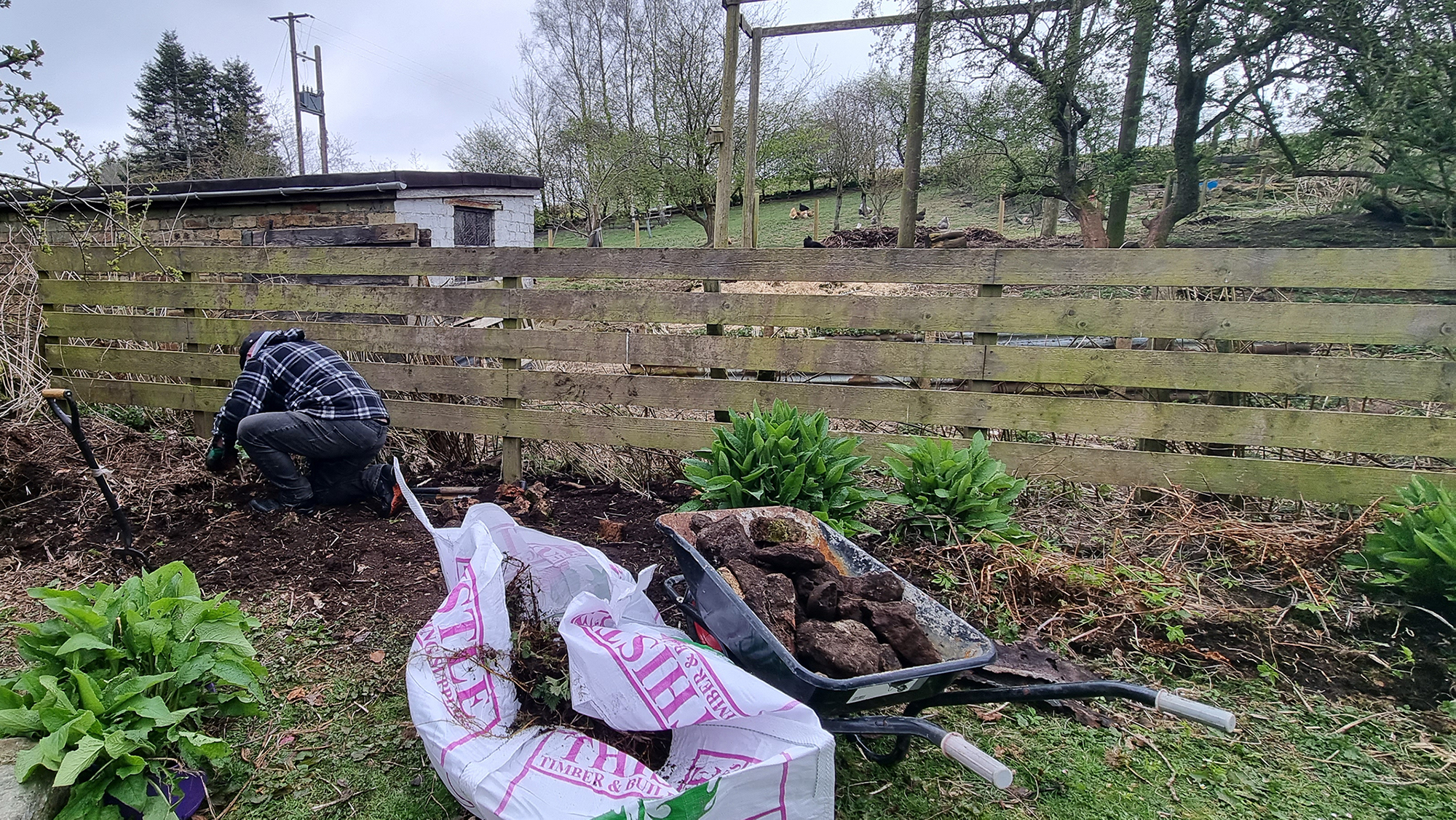
These first two images are from the sales brochure, by Blackwood & Smiths Solicitors & Estate Agents
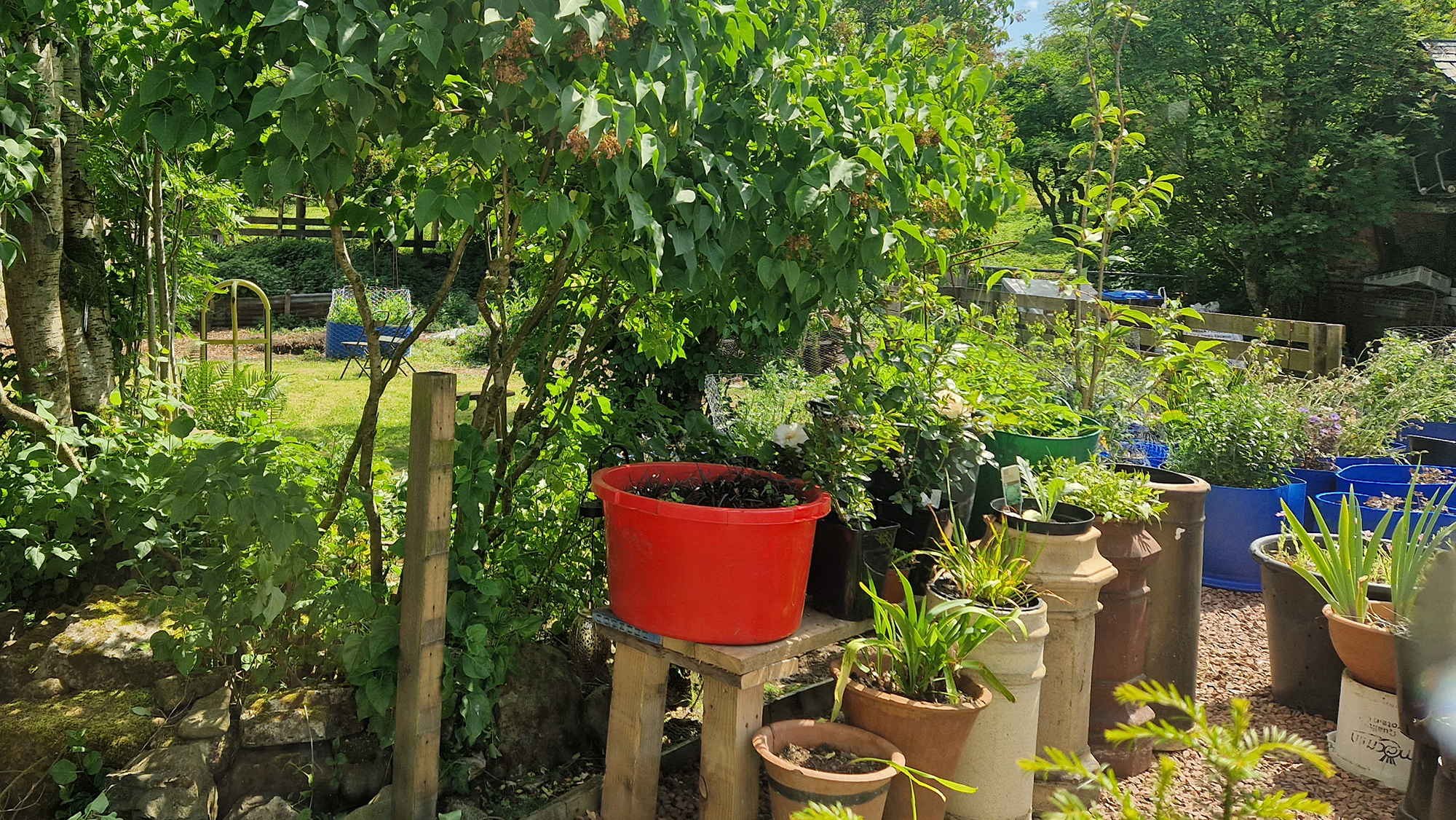
On a side note – tonne bags are heavy…
And not made for humans to lug around
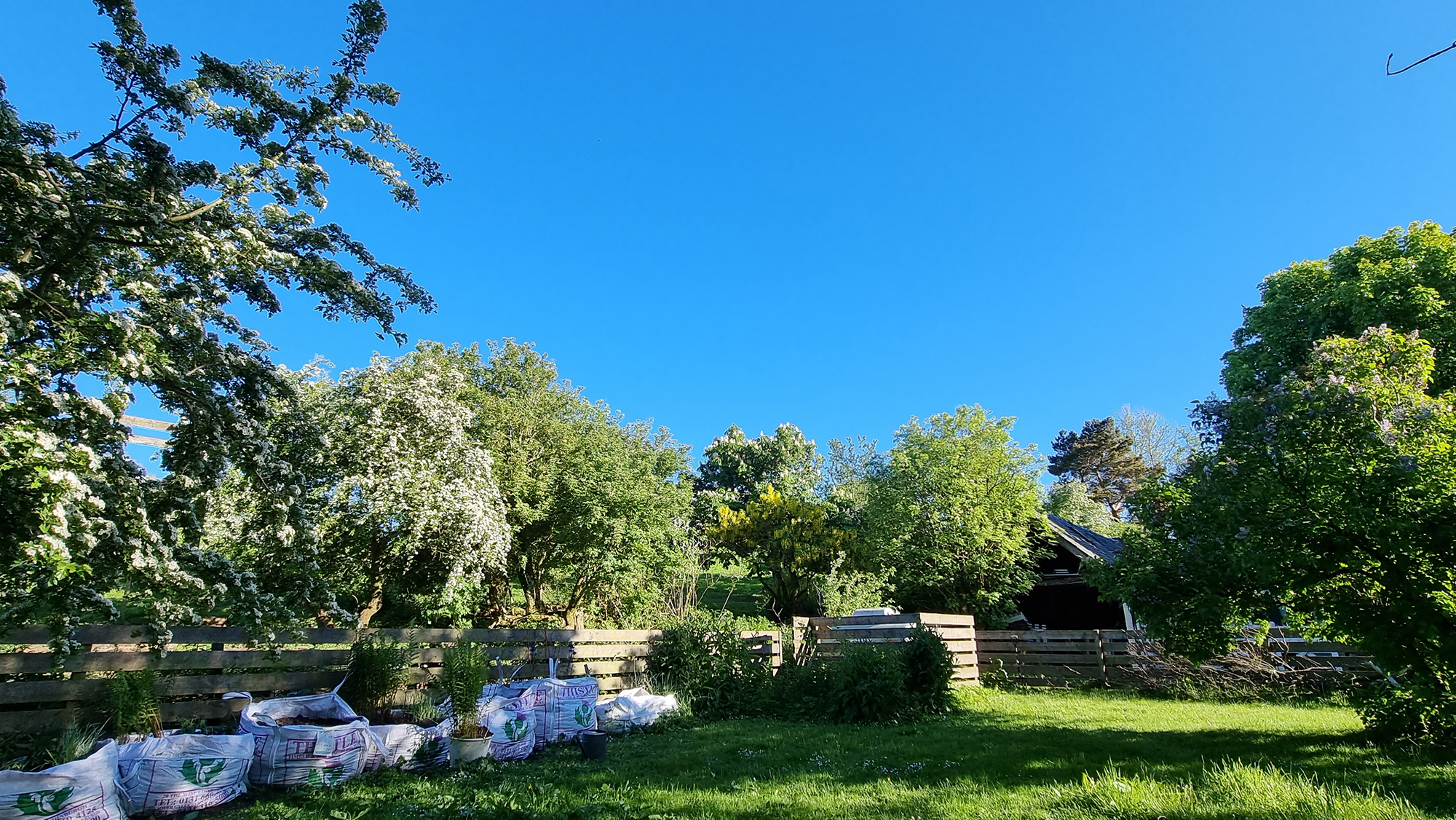
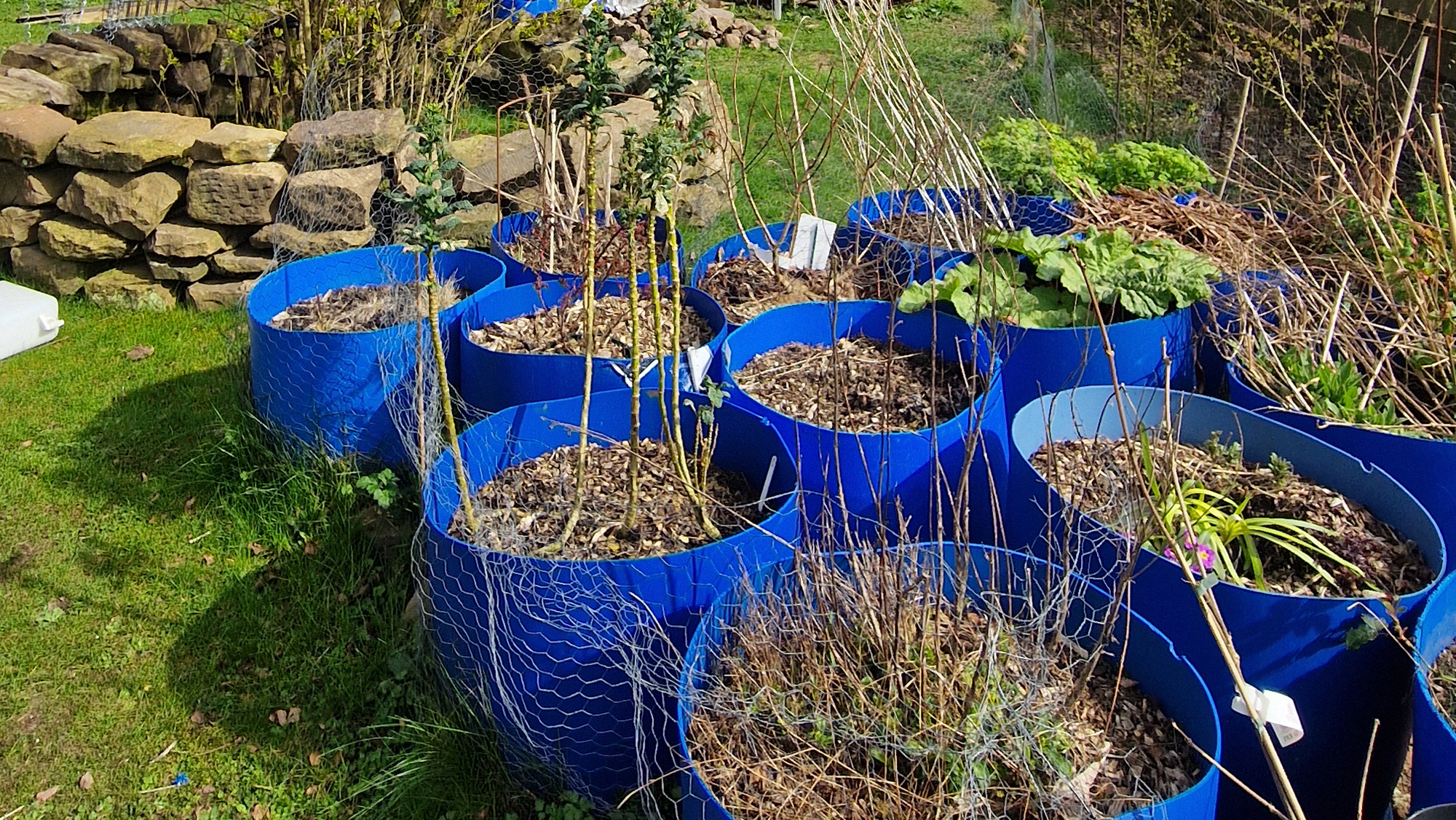
I initially wanted to get the largest planters that I could afford, to plant out my precious divided plants that I had brought from our old place. It turns out that large planters are prohibitively expensive when you have no budget, so my enquiring mind started to troubleshoot the problem… Maybe tonne bags would work, we needed soil, maybe we could plant into them? I had another plan, which was to plant at height to avoid growing rabbit food. Maybe we could use the bags to create a barrier at the end of the garden? Technically yes, but really no… the tonne bags came with builders’ topsoil (clay) which was delivered to the roadside. We manually moved 8-tonne bags to the boundary. Alex is a mean man with a shovel and a wheelbarrow, but even this tried his patience. Some very hardy plants managed in the soggy clay that filled the bags, my lovingly planted and labelled seeds either didn’t make it or were pinched out by crows, pigeons and chickens. Tonne bags also don’t fit together that well and tend to sag over time, so after we sadly watched the bunny family squeezing through tiny gaps and climbing up into and over the tonne bags, we encase these with jaggy chicken wire. Not a great success. We eventually opted for recycled blue barrels, which we cut in half, and then had to surround with chicken wire, and with putting our smaller pots on make shift tables made of recycled scaffolding planks.
Designing our kitchen garden
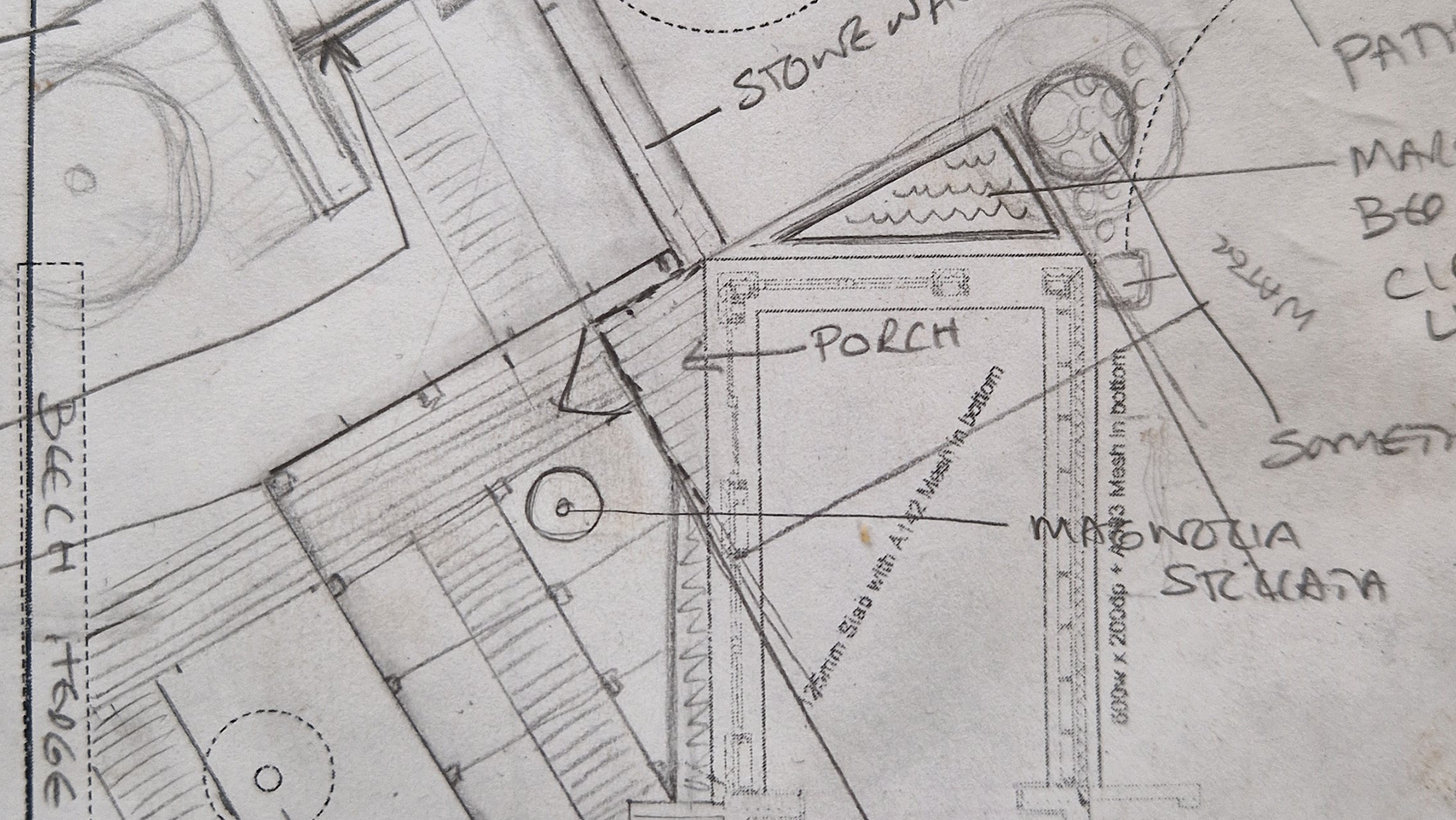
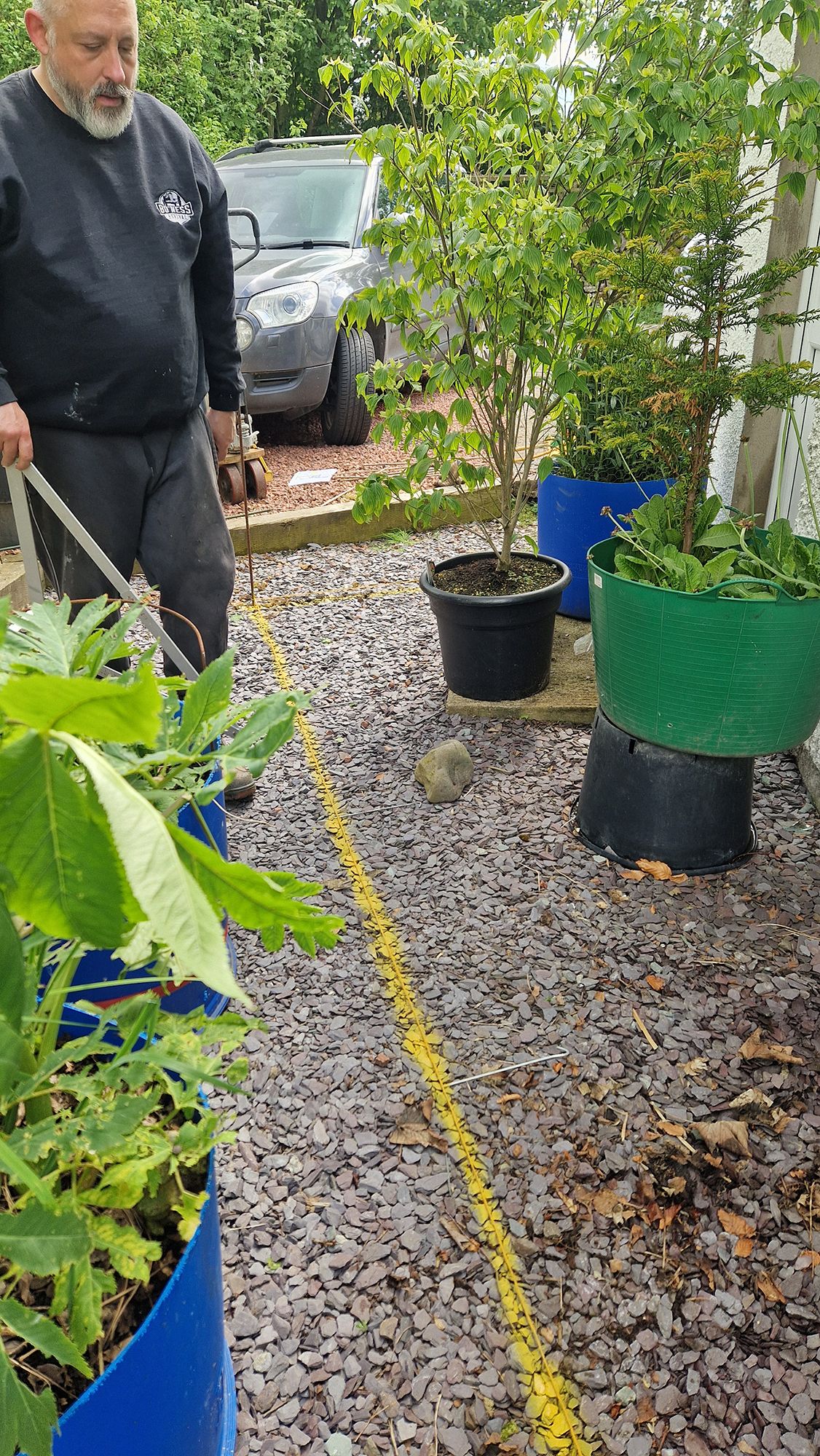
We have only designed one garden before (check out Gardener’s World 2020 episode 13 – Internet Archive Time stamp 30.50, or have a read of my blog). We designed our small city garden in Edinburgh, with straight lines, softened with planting and diagonal paths to make the small space seem larger. This garden is substantially larger. We had a plan of our house, we measured out the land that we had, added it to the drawing and shrunk it to fit an A4 sheet, and printed numerous copies. These we drew and scribbled on for months, looking out the windows to imagine what might be there, walking around with a spray can, measuring and measuring and slowly working out what could be. We left the plans out so that they were always available to tweak, redraw, start again (they are in a very sorry state now).
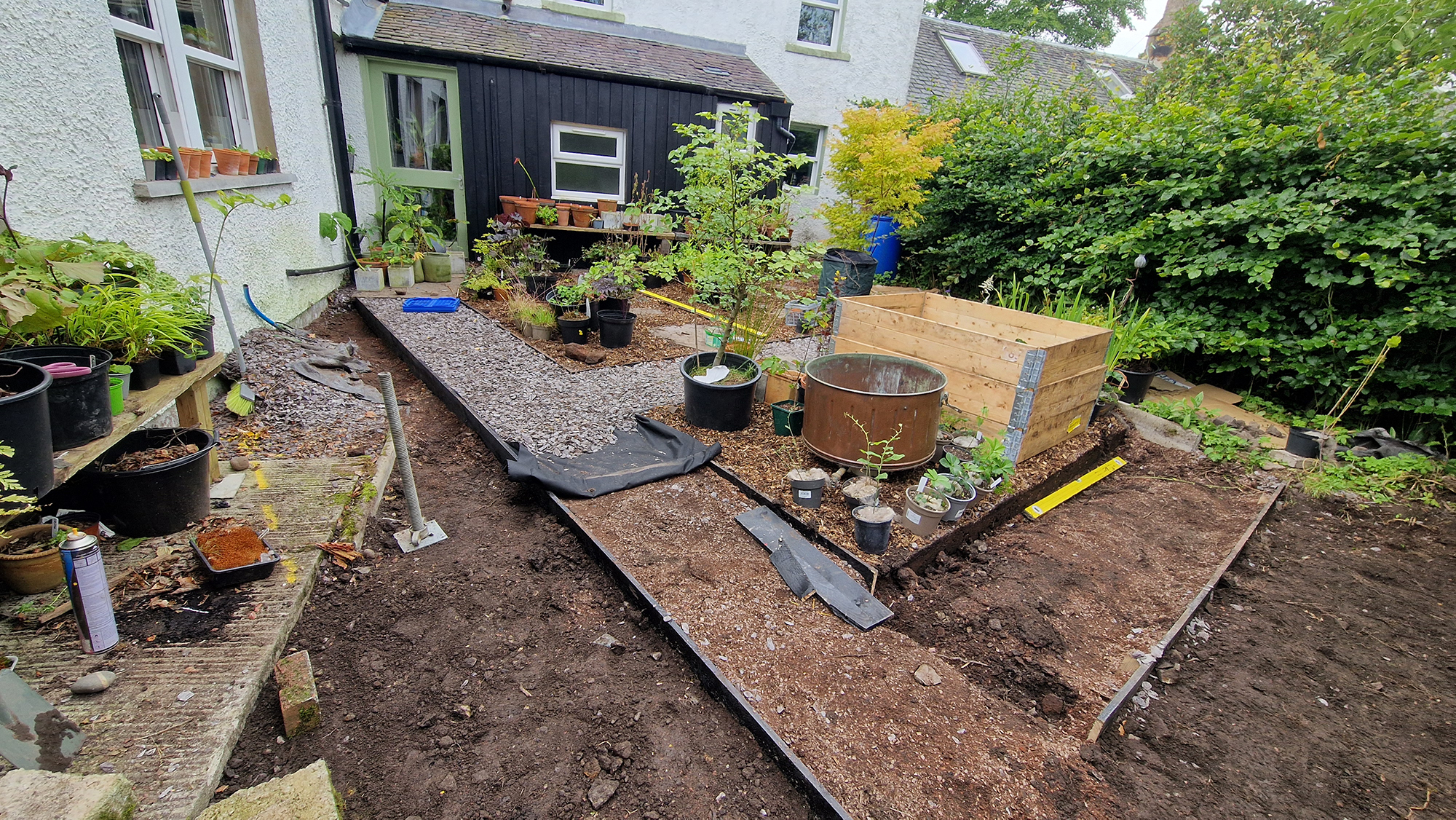
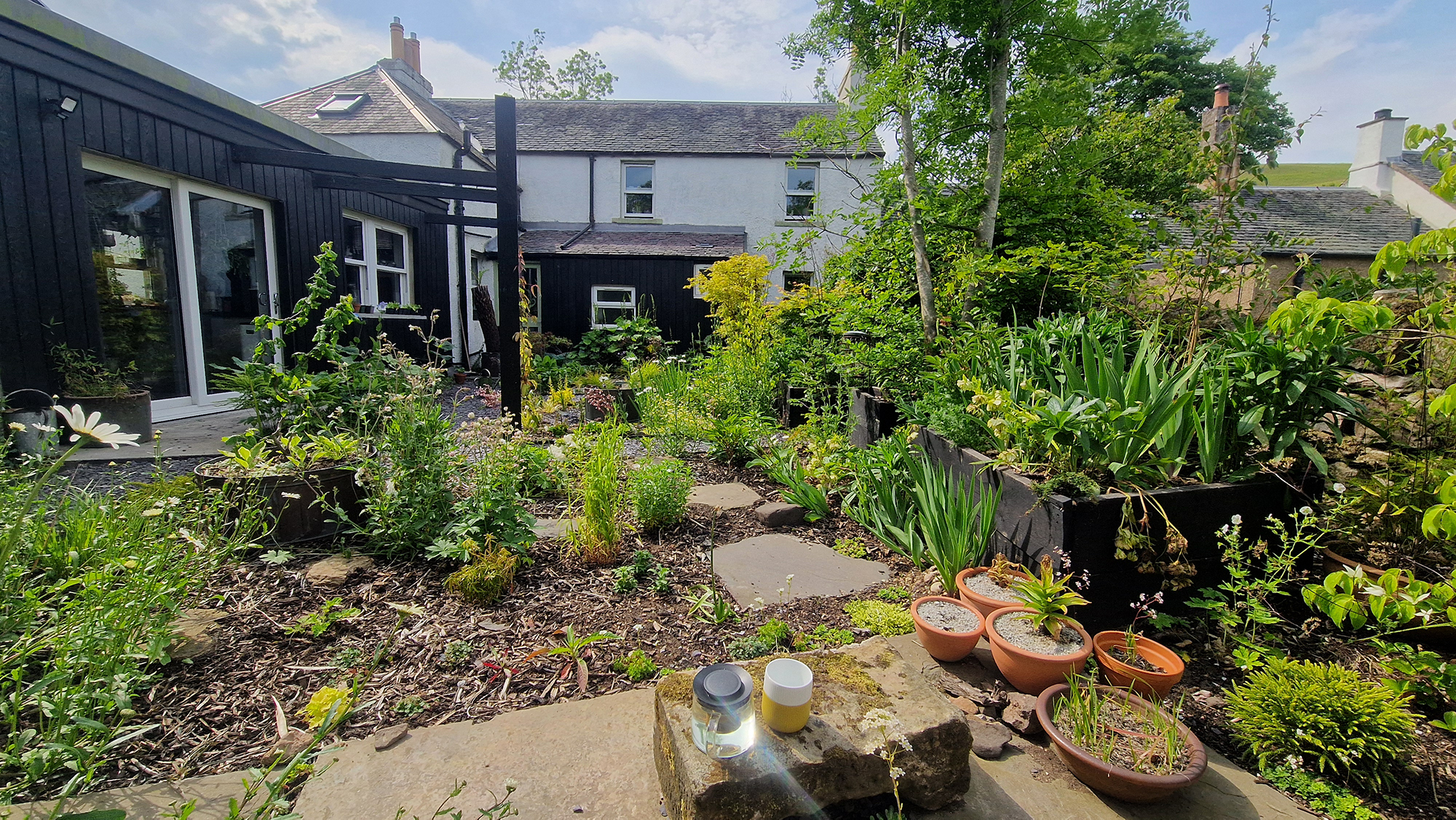
I don’t love the kitchen extension on the back of the cottage, it sticks out like a sore thumb. There is no money for adjusting extensions though, so I decided that one of the prime aims was to do ‘something’ to soften this bulwark’s appearance. I thought I’d try the offset lines trick again, setting a step out from the French doors at 45 degrees to the kitchen block, with all the paths and beds running off this offset.
We also wanted to utilise this space, the shadiest and most sheltered area as an initial garden for us to enjoy from our kitchen space daily, and to house my collection of Arisaema which had either been in pots for a number of years, or dug up and temporally been in pots for a couple of years, and we wanted to move many of the currently chicken wire protected plants that we had brought with us into a rabbit proof space to grow in the ground.
First things first
Before you do this, you have to do that, oh, and this…
There were a few things that we had to contend with before we could begin to lay out the garden as planned.
Polly tunnel and Patio
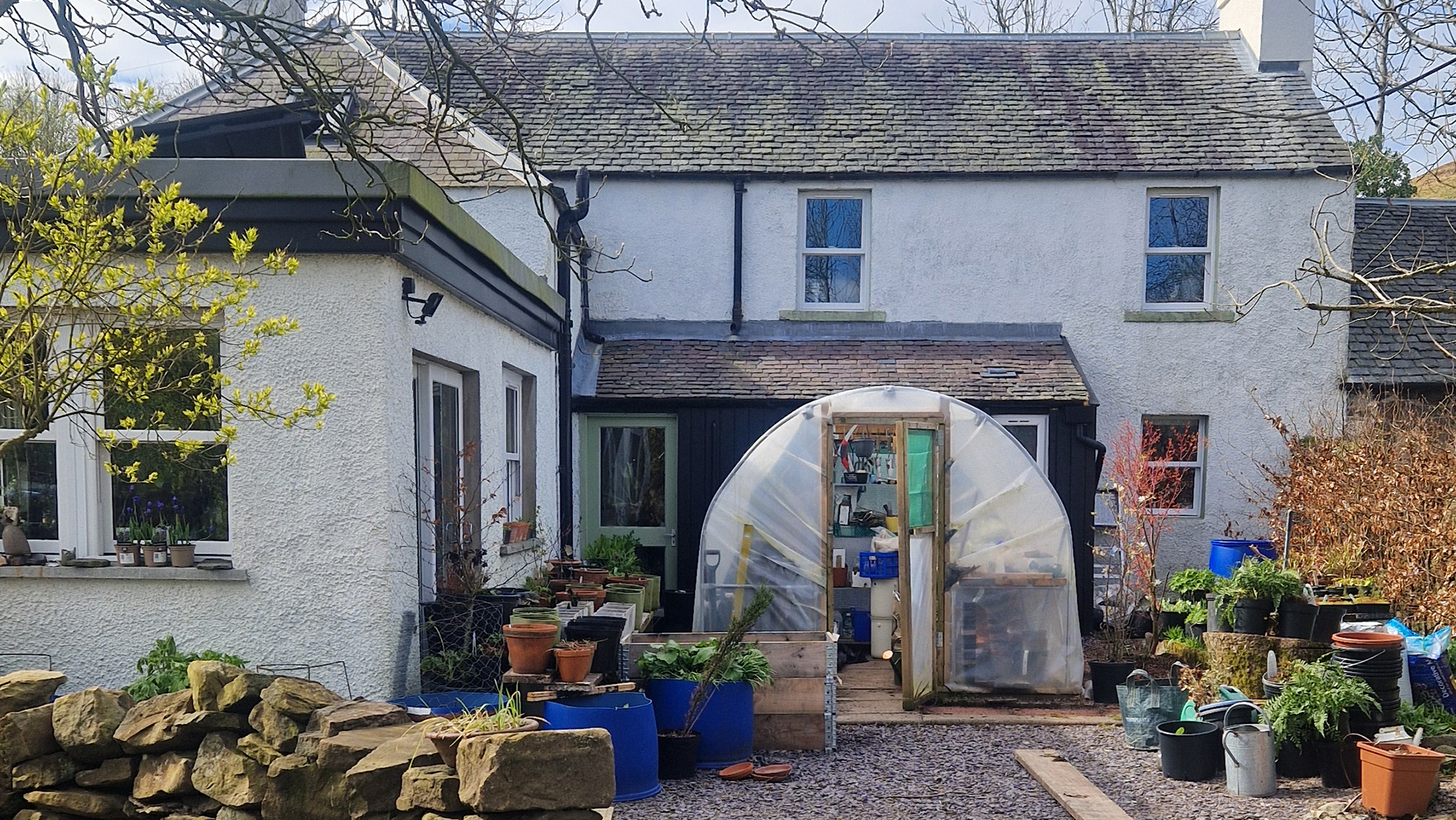
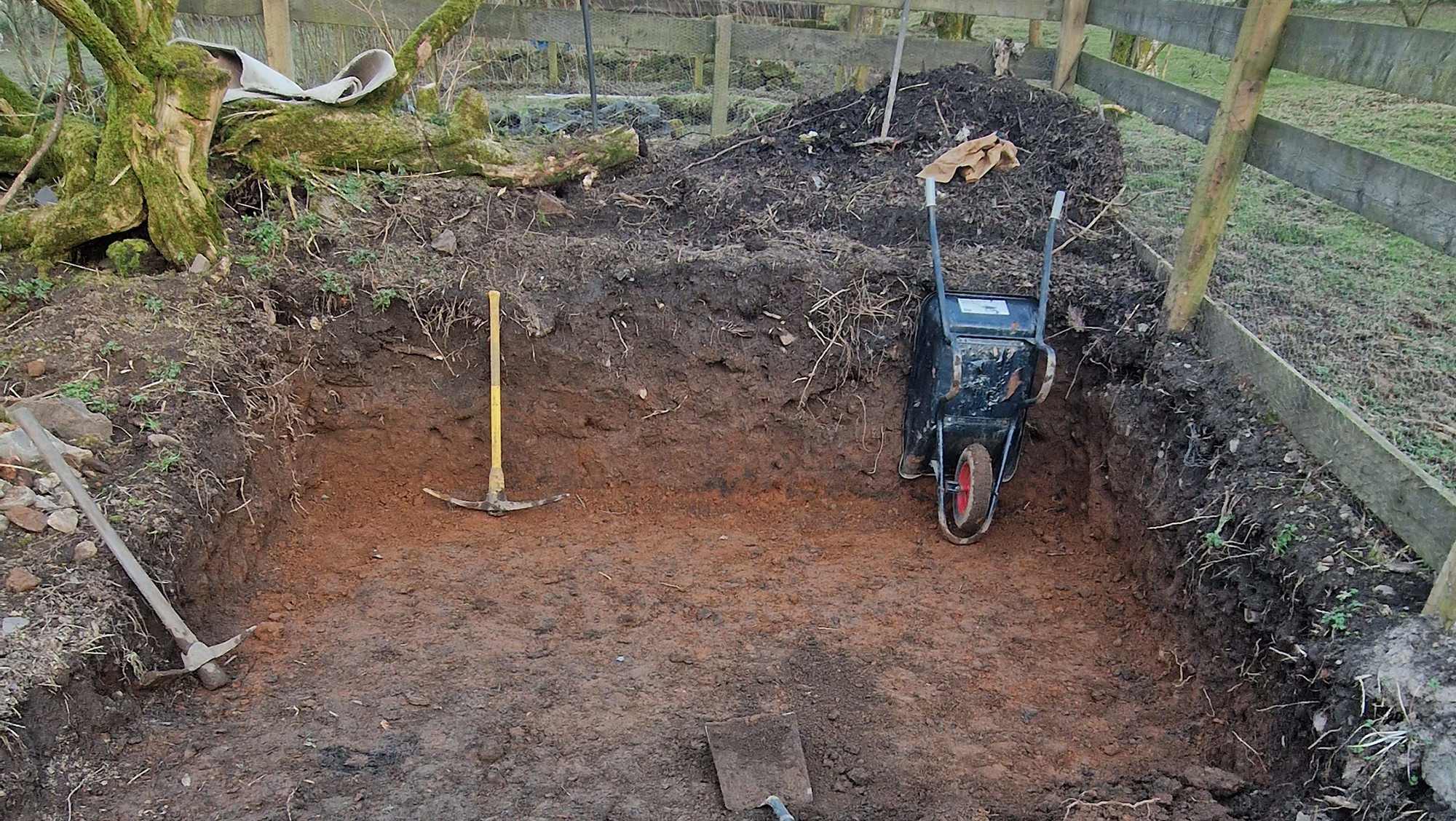
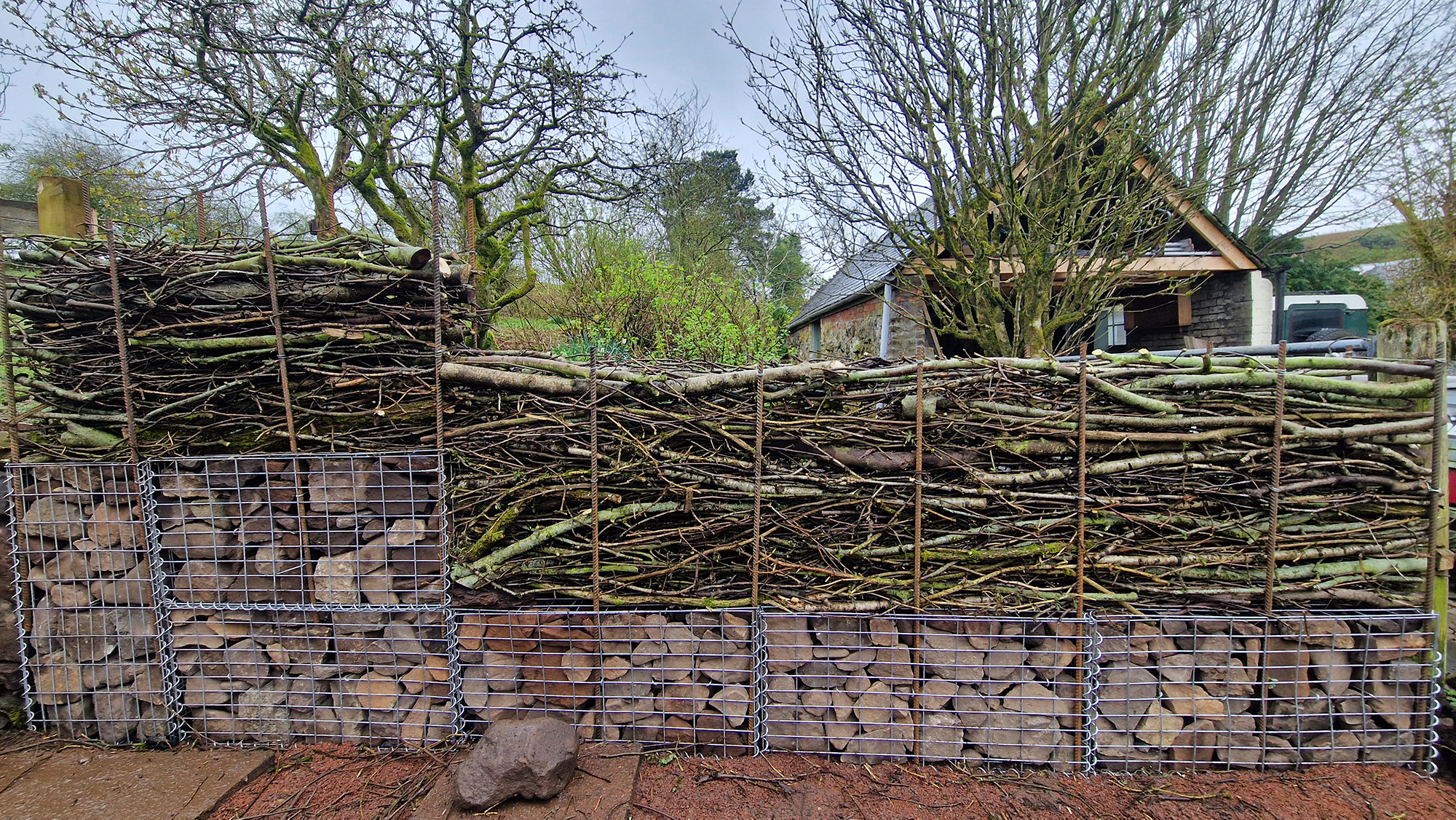
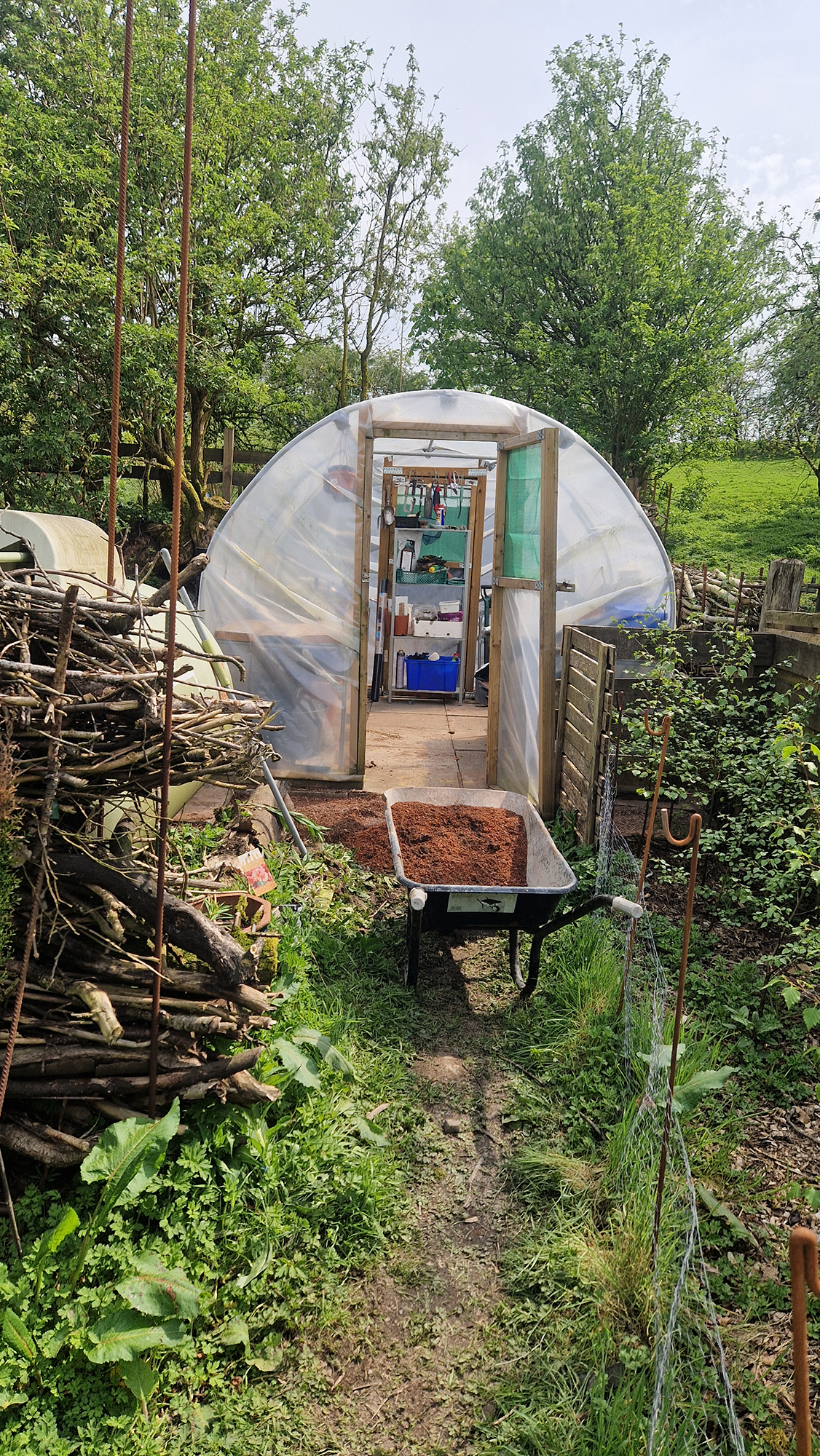
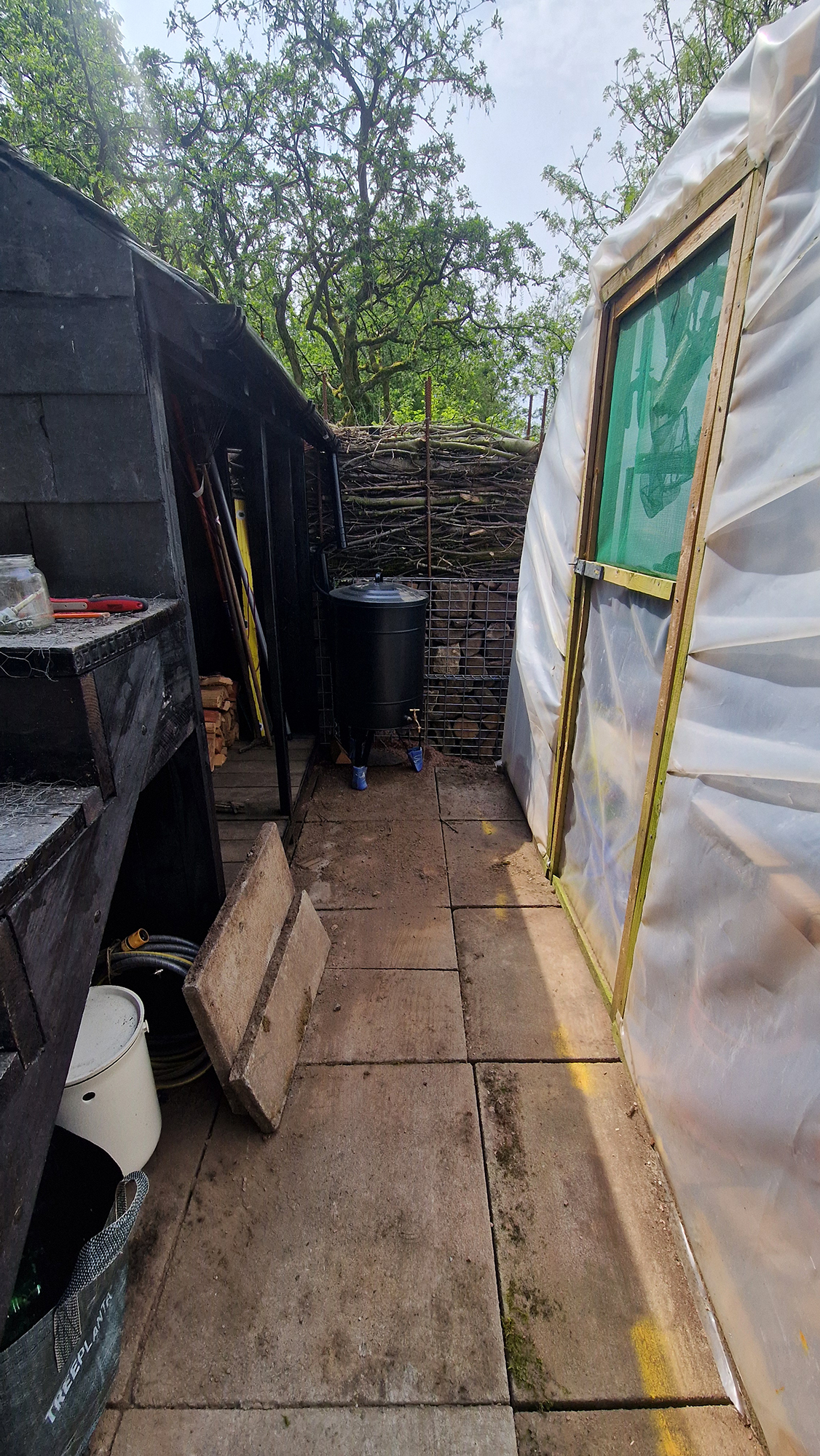
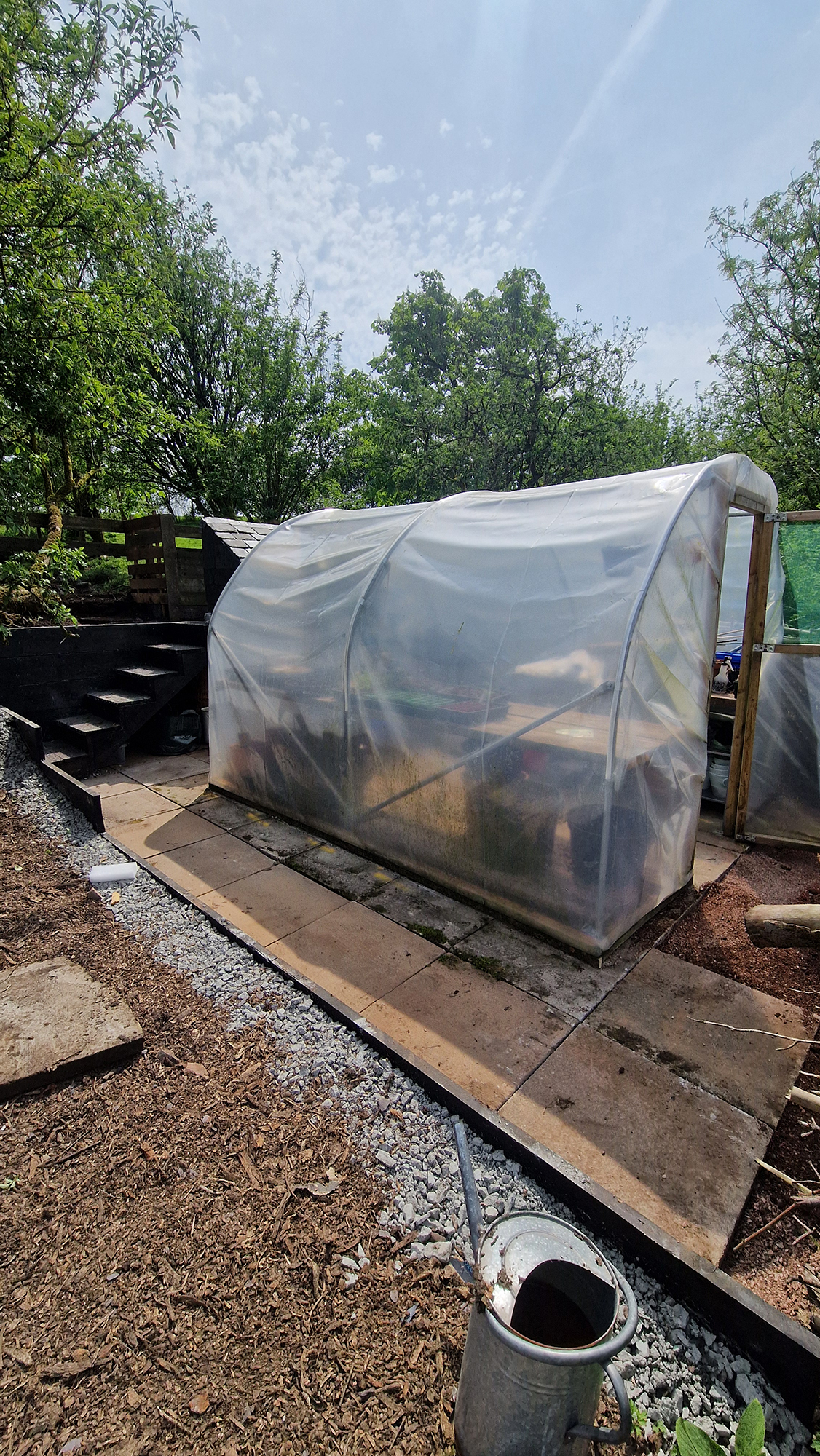
We moved the polytunnel and patio to the far end of the garden, where it could get full sun during the summer. This sounds simple… but it wasn’t. Over our first full winter in 2023, Alex dug out a patio plus-sized space from the small hill at the end of our garden. He shored up the hill edge with planking and built a lovely wood store with a slate roof. He built compost bins up at the top of the hill, with stairs along the planking edge for access. We built a gabion wall along the other edge with a dead hedge, utilising many of the broken bricks and small stones from the rubble heaps, and twigs and branches that we had accumulated over the past year. The patio was then moved, slab by slab, into the accommodating space Alex had dug out and levelled (our neighbour has a greenhouse that was tunnelled into from below by our lovely rabbit family, who then enjoyed her lovely vegetables and herbs in the warmth & shelter of the greenhouse). Our polytunnel was then moved onto the patio and secured to the slabs – did I mention this valley is called Windy Gowl? Huge thanks to our friends who helped move the polytunnel, tortoise-like, up the garden, each grasping a stanchion. We did give them dinner 😉
Sycamore, oh sycamore
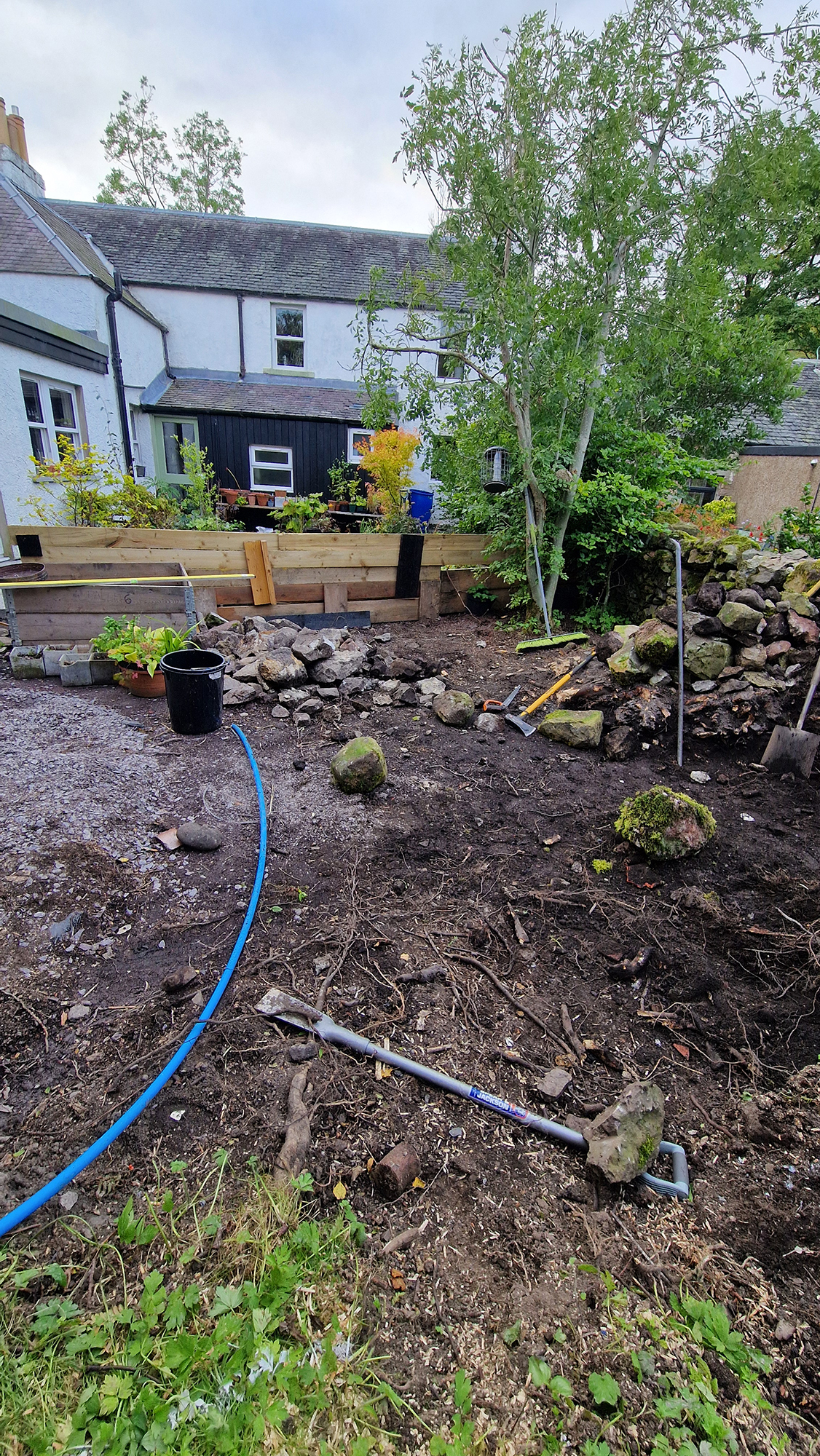
We had a Sycamore growing on and in our stone boundary wall. It was growing over previous versions of the wall, which had fallen down; it was growing over broken concrete, old bricks, and glass, so much broken glass and the saucepan lid. It had been badly coppiced in the past, and 30-foot limbs had sprouted around the circumference of various of the rotten trunks. We had a few tree surgeons out to see if the tree could be saved, but we were warned that the next big storm could bring one or more of those limbs crashing down on our neighbor’s cottage, or on our kitchen extension. So it had to go. We had to seek permission to remove it as we live in a protected area. With permission granted, a company came out and removed the tree. They took it down to ground level (the mound of rubble) and left the tree for us to cut up and store. We left it out for a year so that the wildlife in the tree could slowly relocate themselves and then Alex spent a happy birthday with a log chopper!
We still had a stump though, at around six feet in diameter, it was sizable. Alex used many heavy tools to level it. In this process, we discovered the chain saw blades do not like glass, it wrecks them, and eventually, with chunks of sycamore flying, Alex did his work with crowbars and axes and heavy heavy tools! Honours go to Alex! Well done!
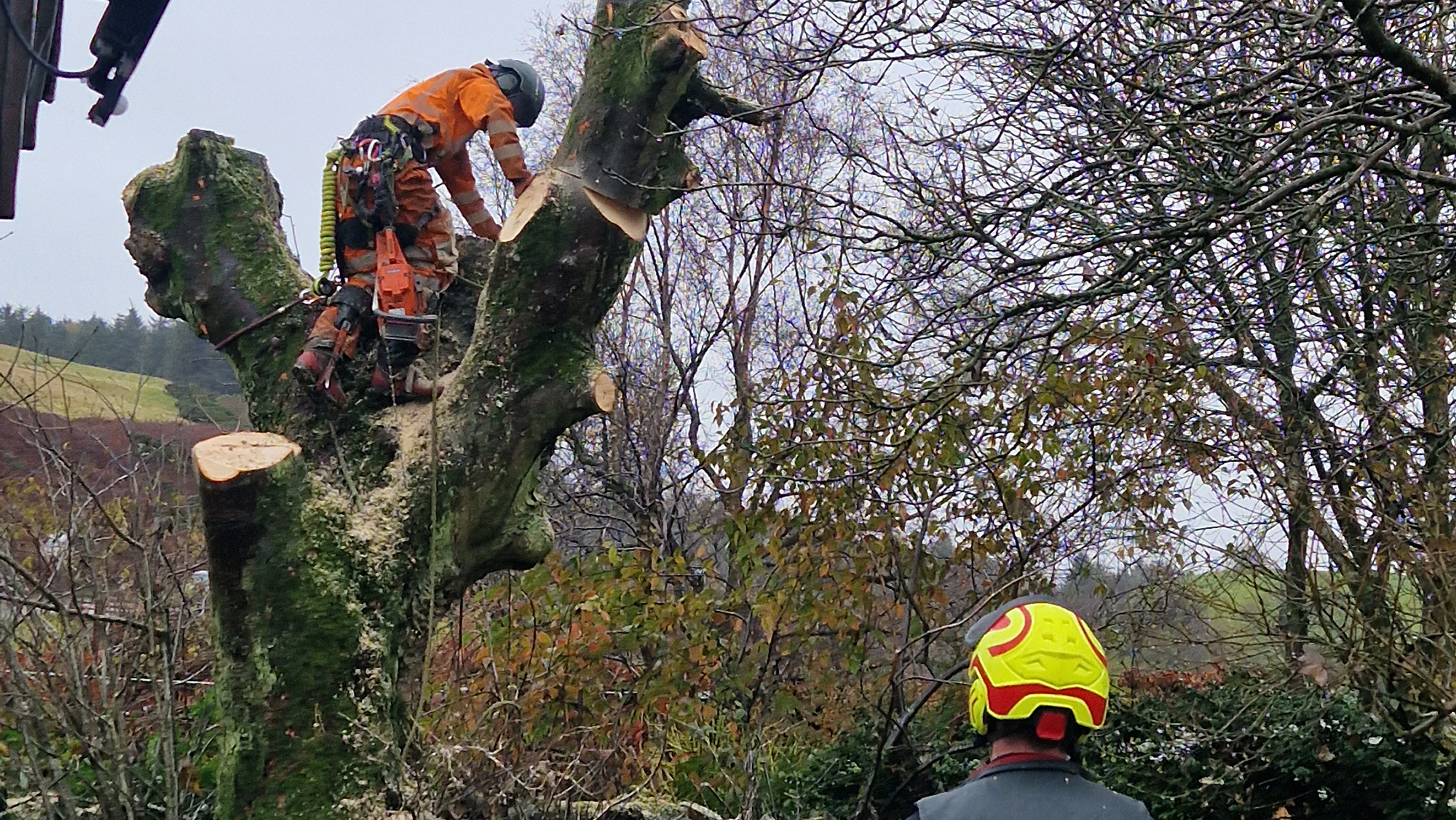
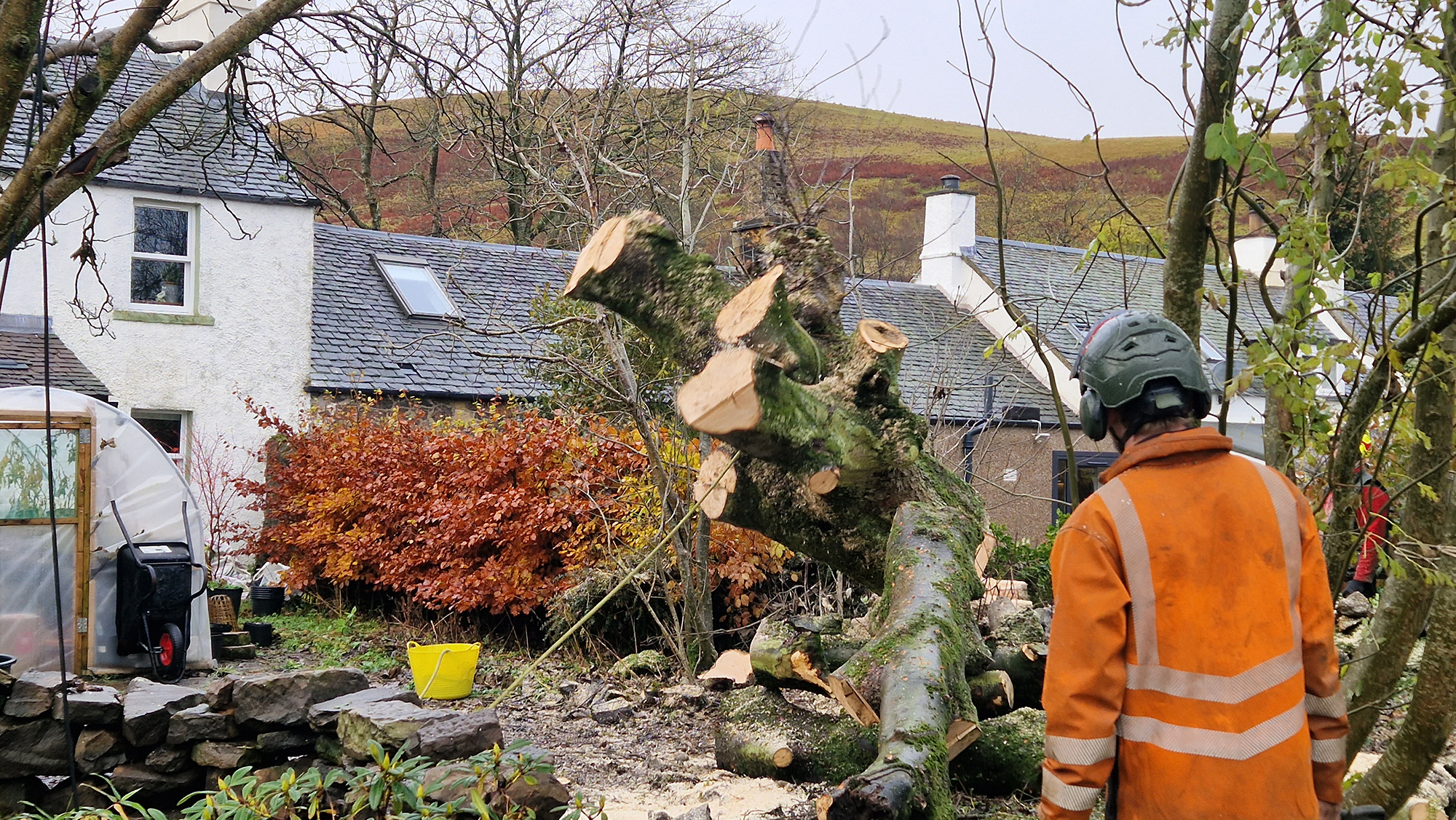
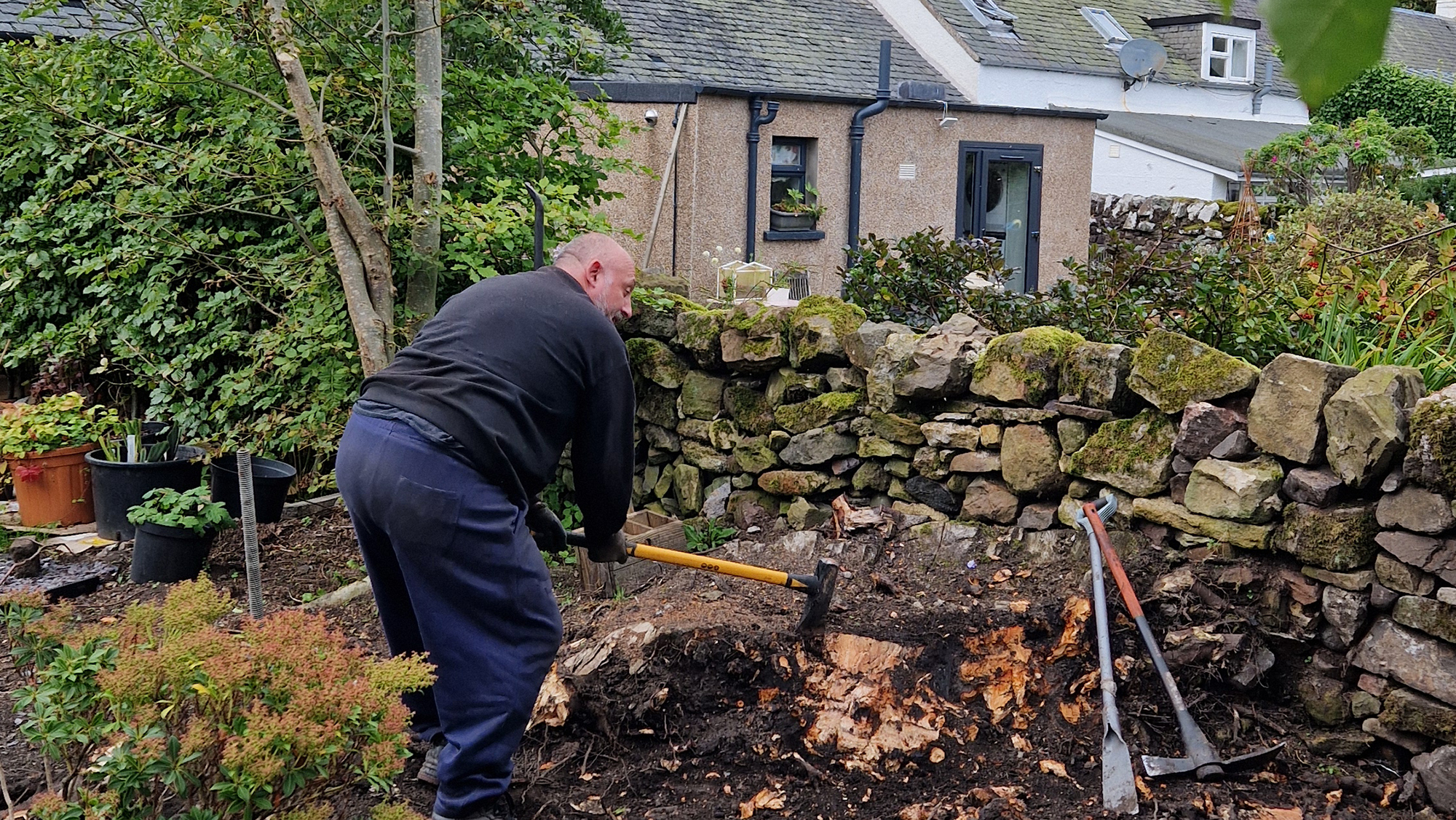
Refining the design, in the space
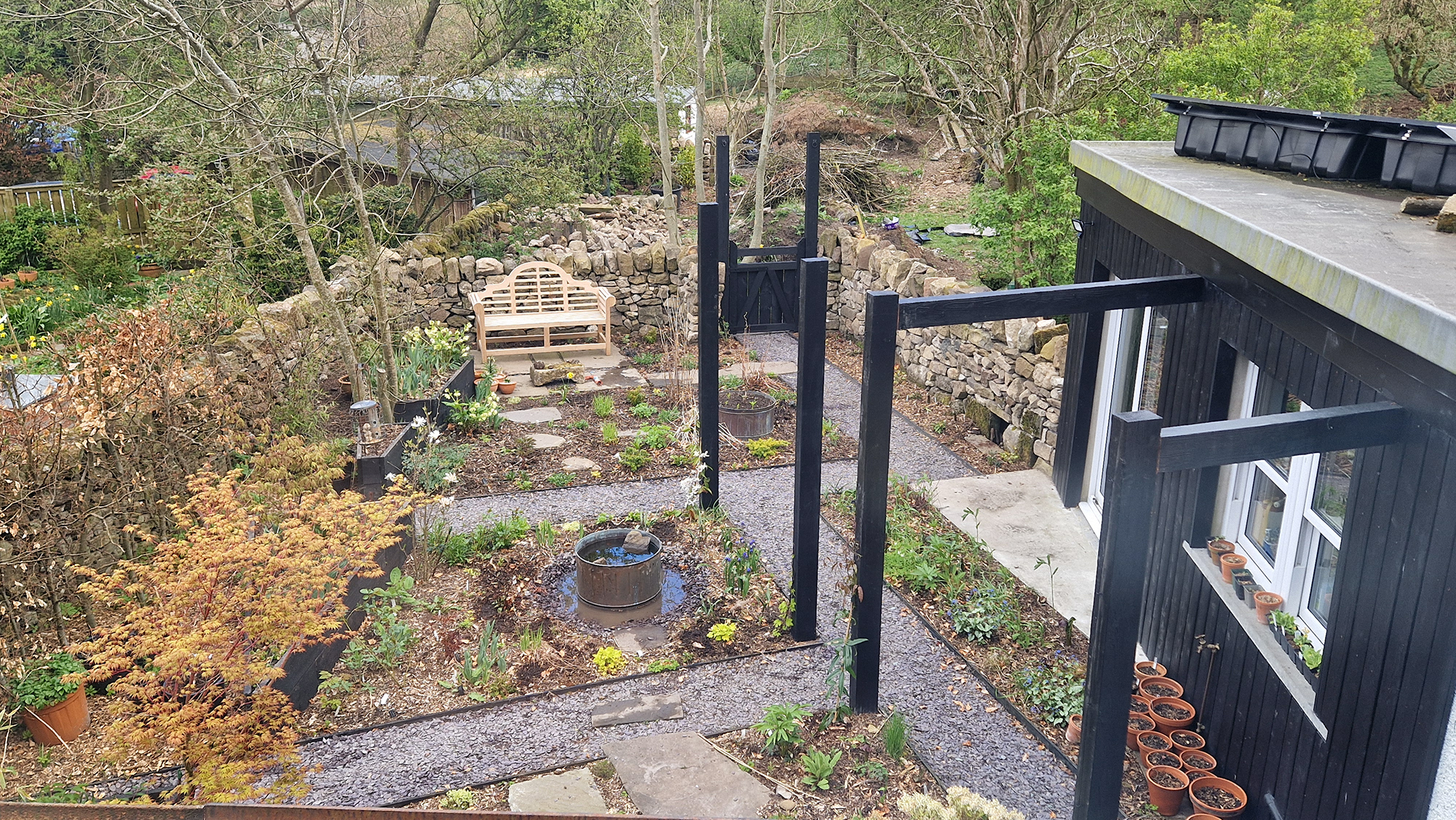
We had a basic design, deep beds broken up with paths, offset from the extension and the cottage at 45 degrees. It was our vantage point from the kitchen, so we had to love it.
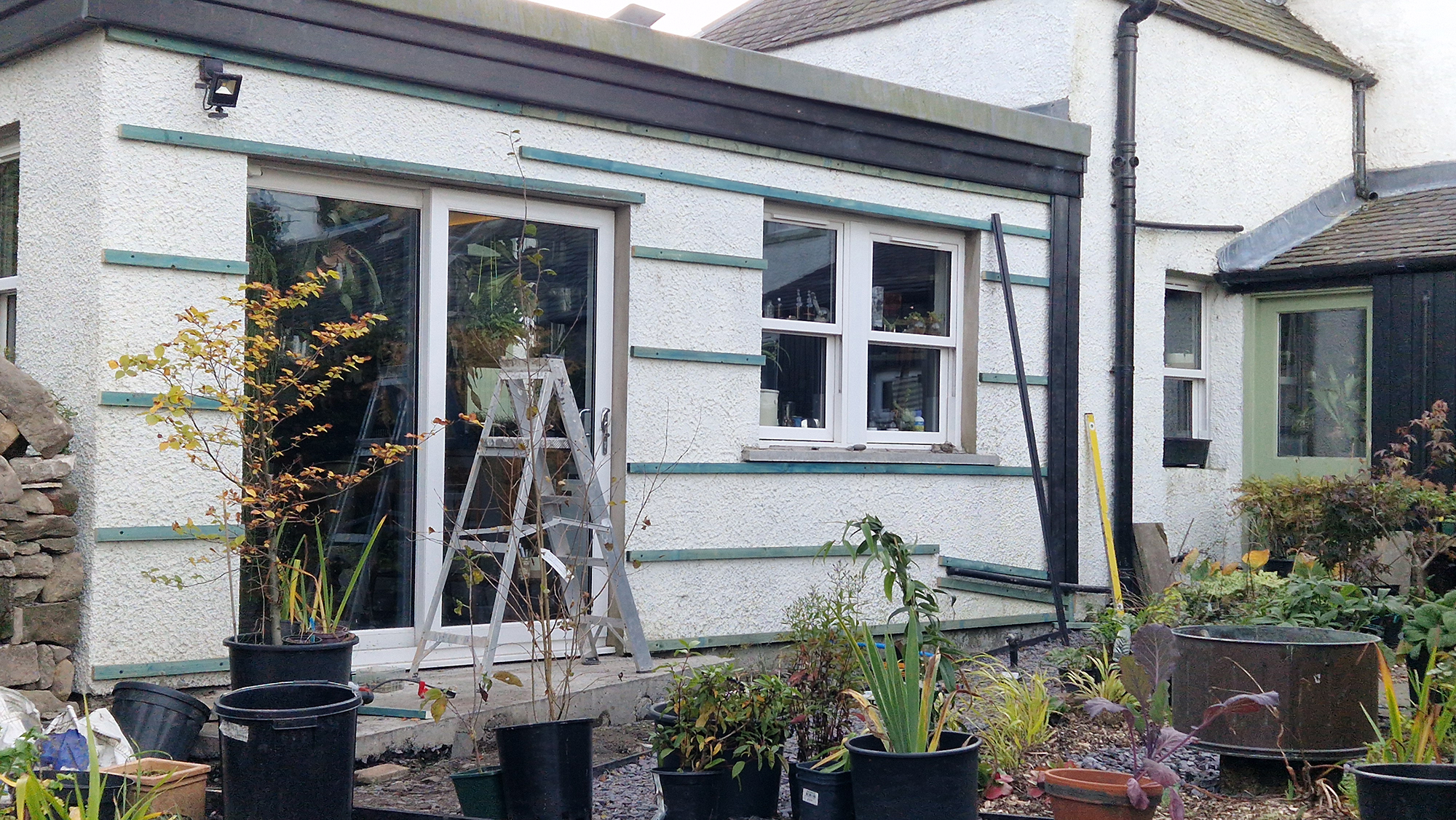
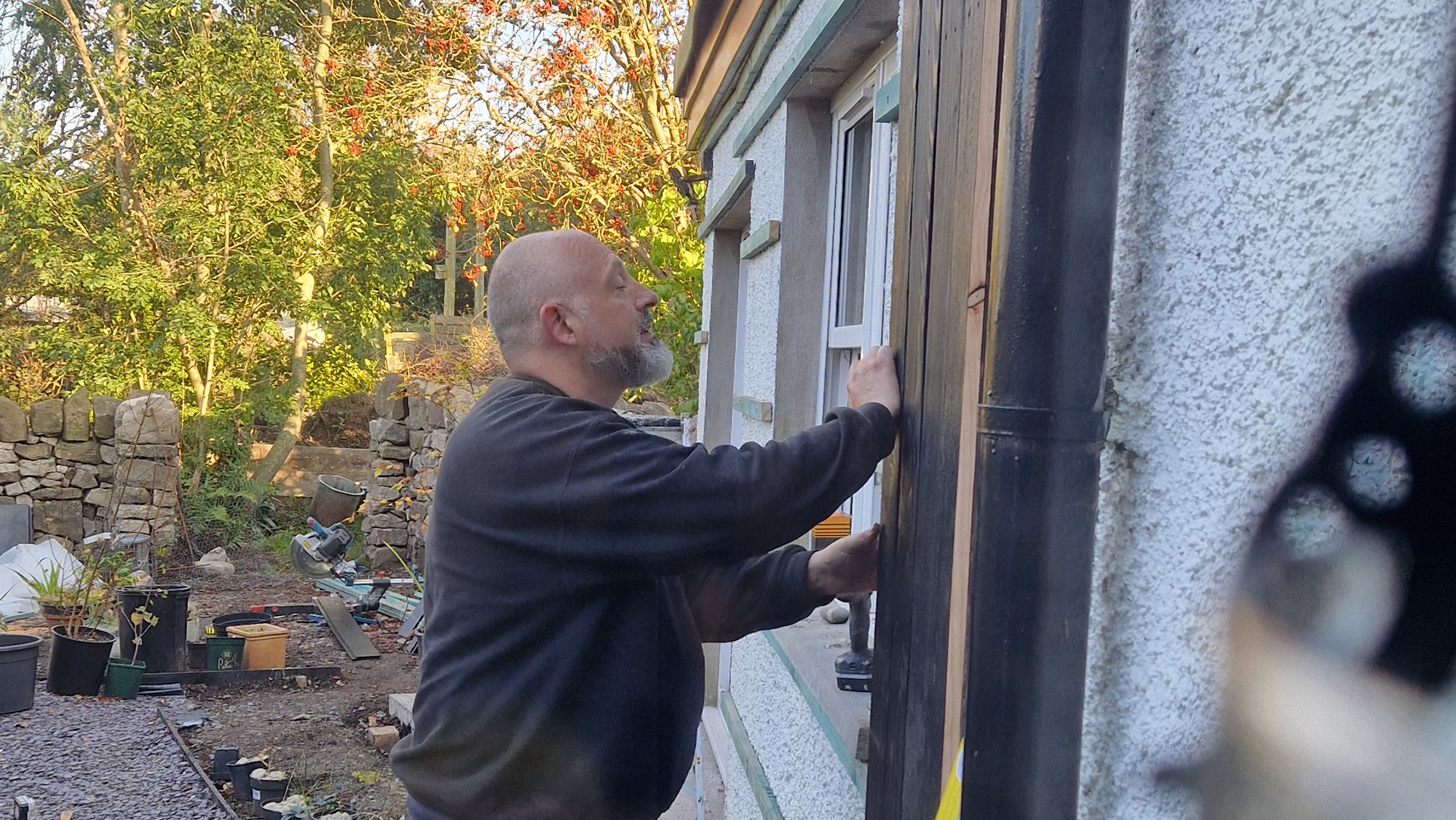
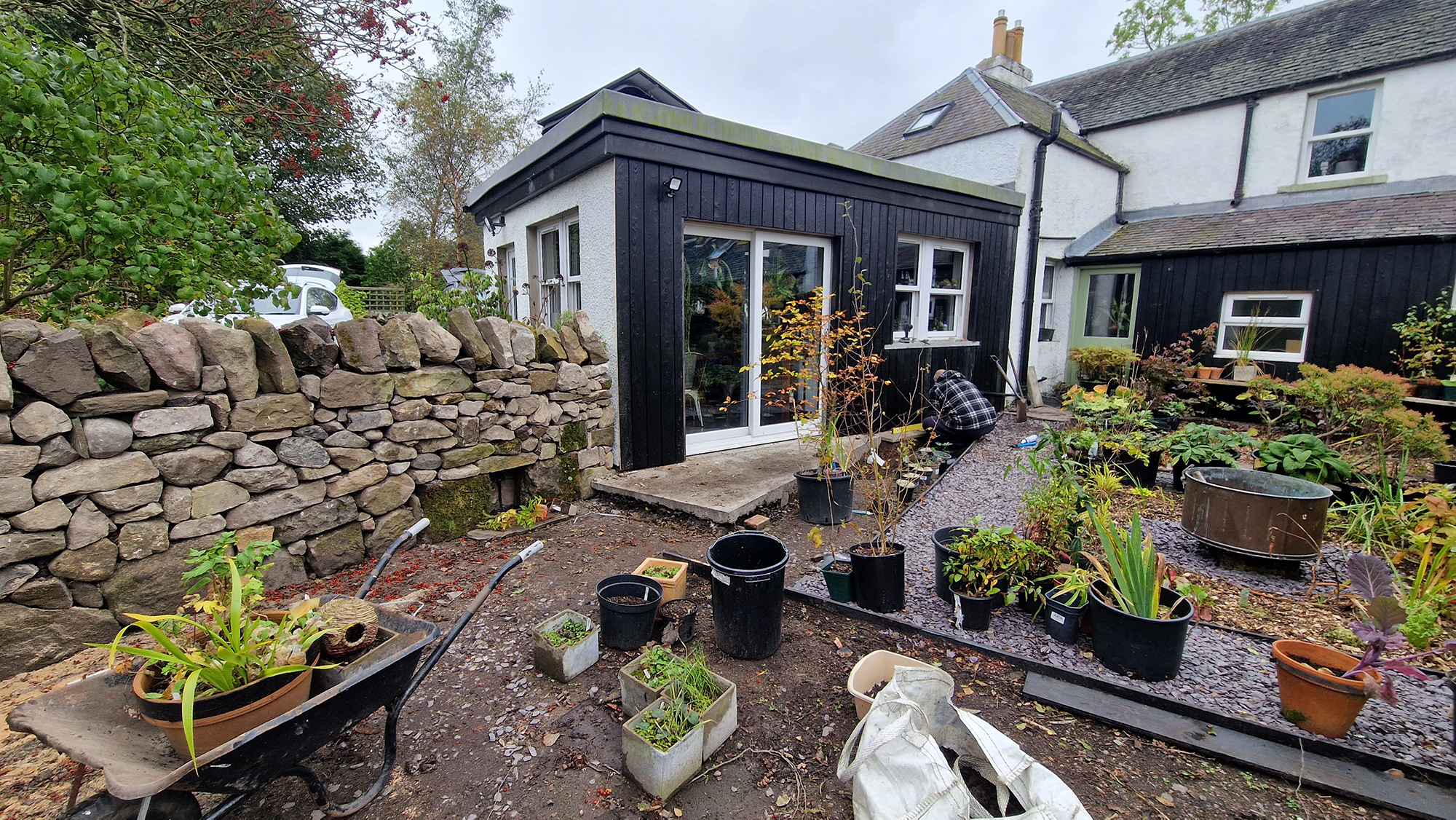
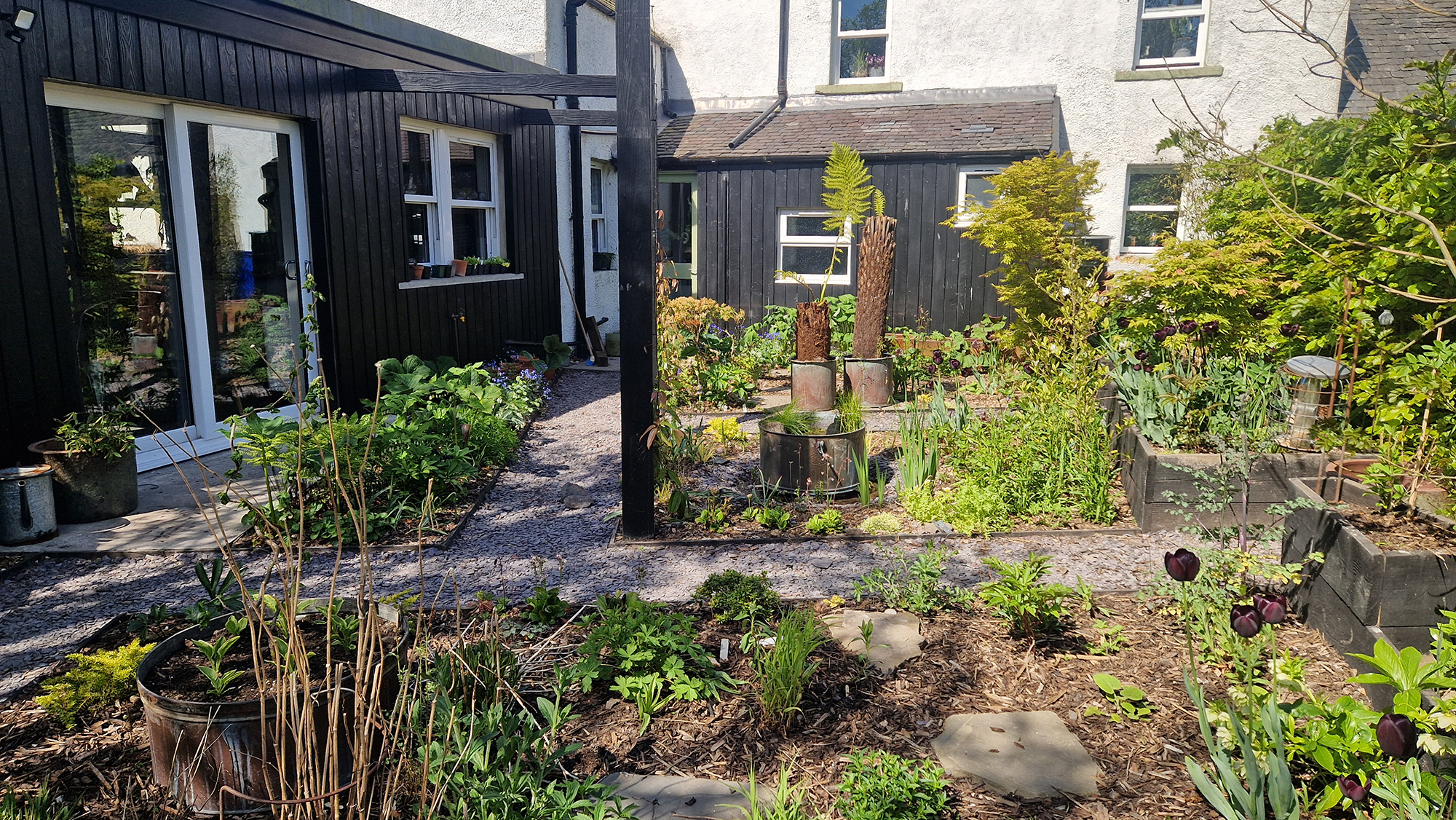
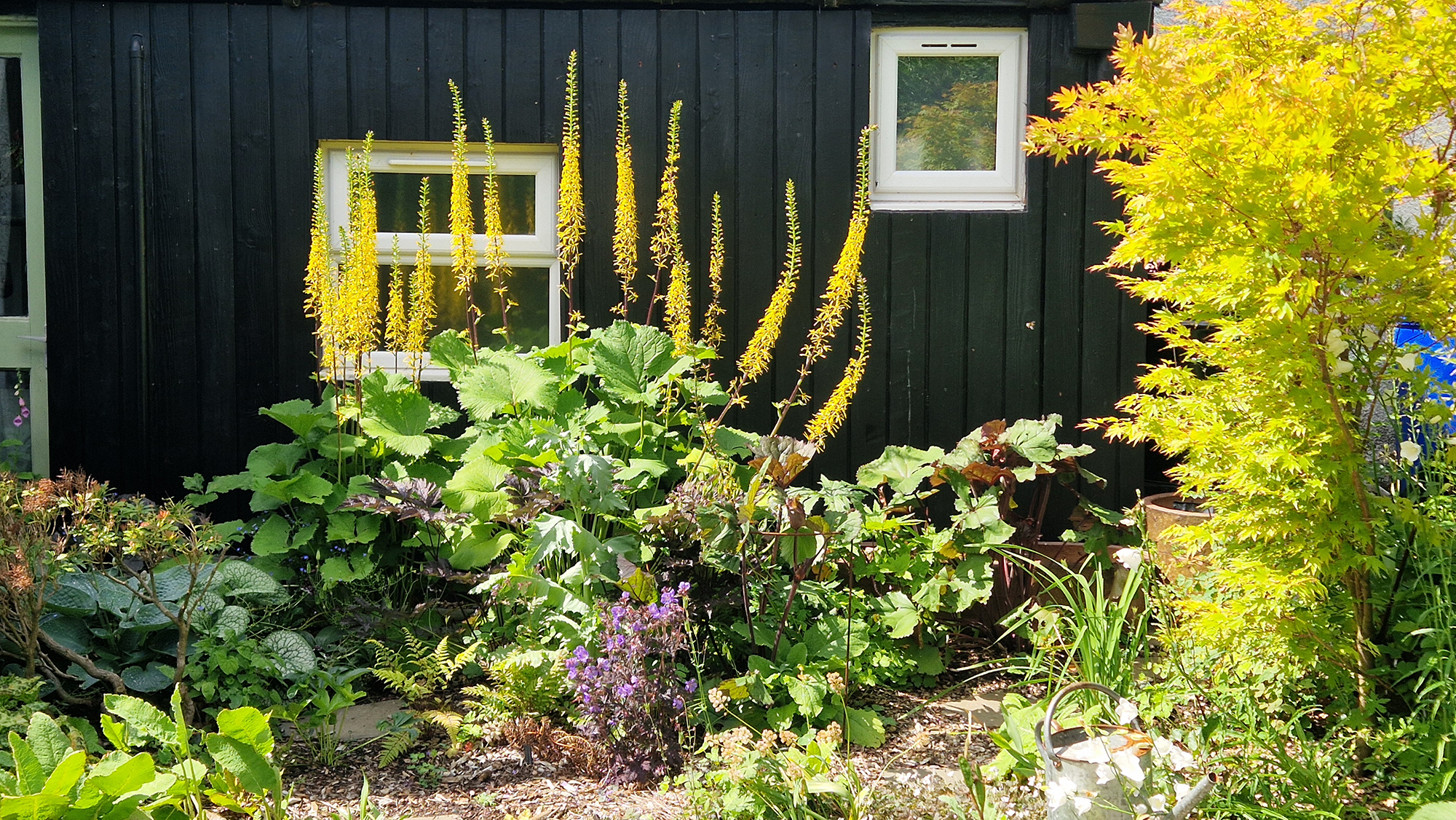
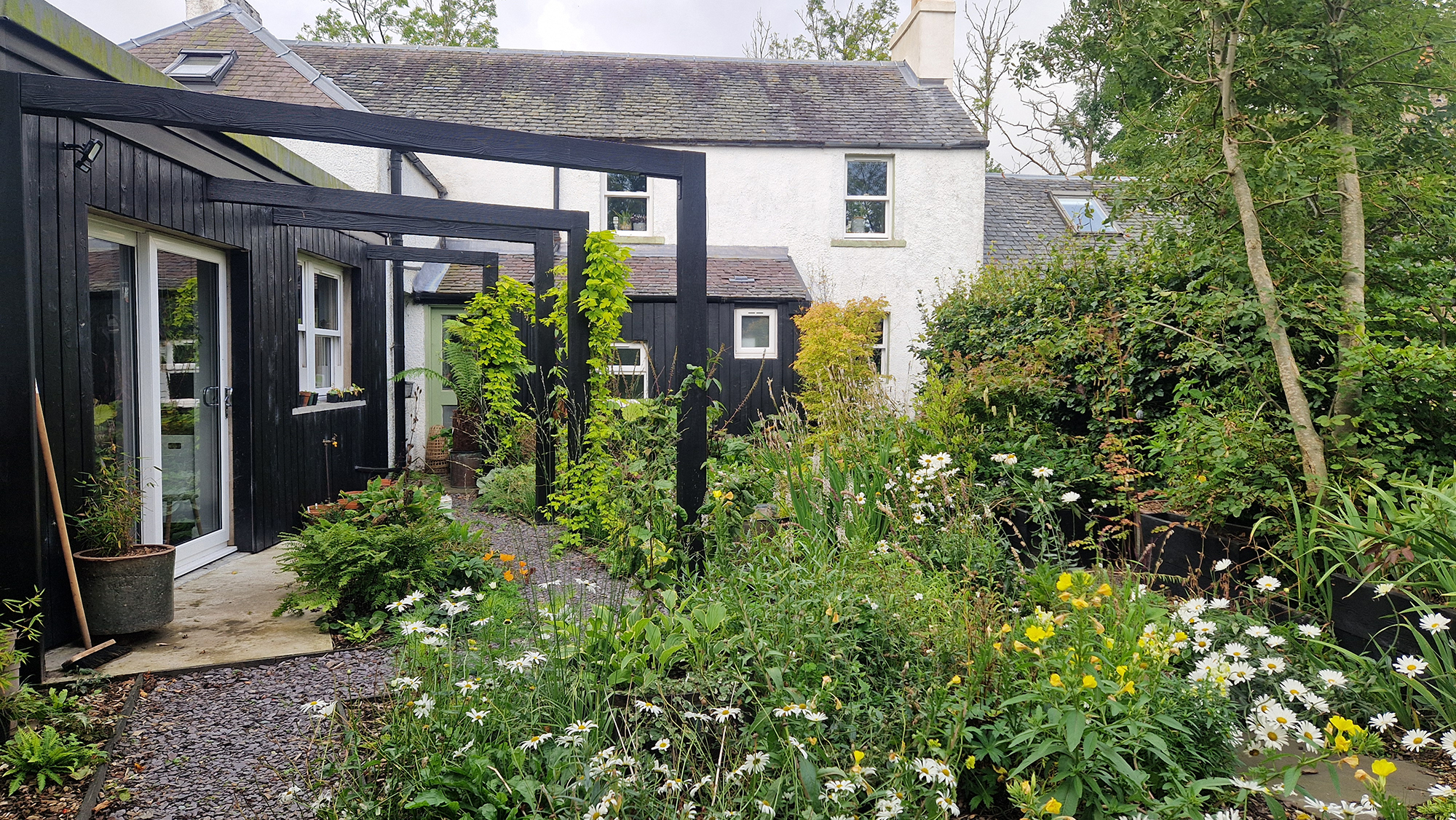
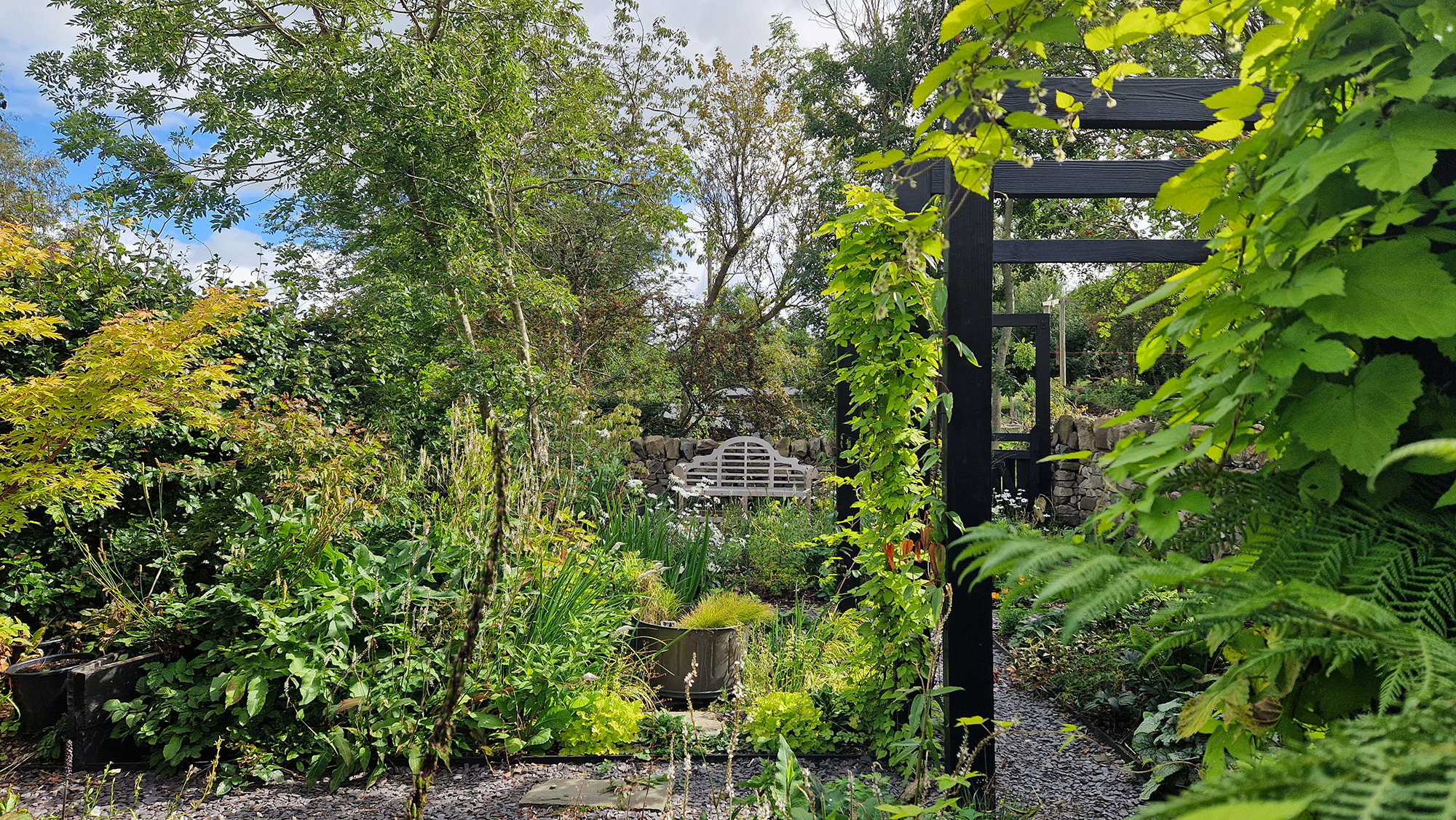
As well as defining the bed areas we wanted to change the look of the cottage at the back. We decided to clad the 1928 bathroom, which had been left as an uninsulated single brick wall, in foil and felt insulation with burnt clad larch from Tiny Temple, a local cladding company that specialises in Shou Sugi Ban, the process seals the larch and makes it less susceptible to rotting in our damp climate. Insulating the bathroom cleared up a lot of damp problems that we had been experiencing, and it looked fantastic. We did that in the winter of 2023, we followed it up in the summer of 2024, while we were building the beds and paths with cladding along the kitchen extension wall. It looks great, the walls recede instead of sitting there as a huge white roughcast block, and the greens really pop over the black. The burnt wood has such beauty, we are so glad we opted to use it. We have also developed the garden upwards; we designed a pergola-type structure that follows the shape of the main path, so the structure gets incrementally larger in a triangular fashion along the kitchen wall. These beams are also in burnt larch. They went in this year 2025, and have hops and evergreen clematis growing up them. Again, the offset structure masks the rectangular block. We are not sure if the clematis will survive, we are at 900 feet, so things that worked well in Edinburgh may not at this altitude.
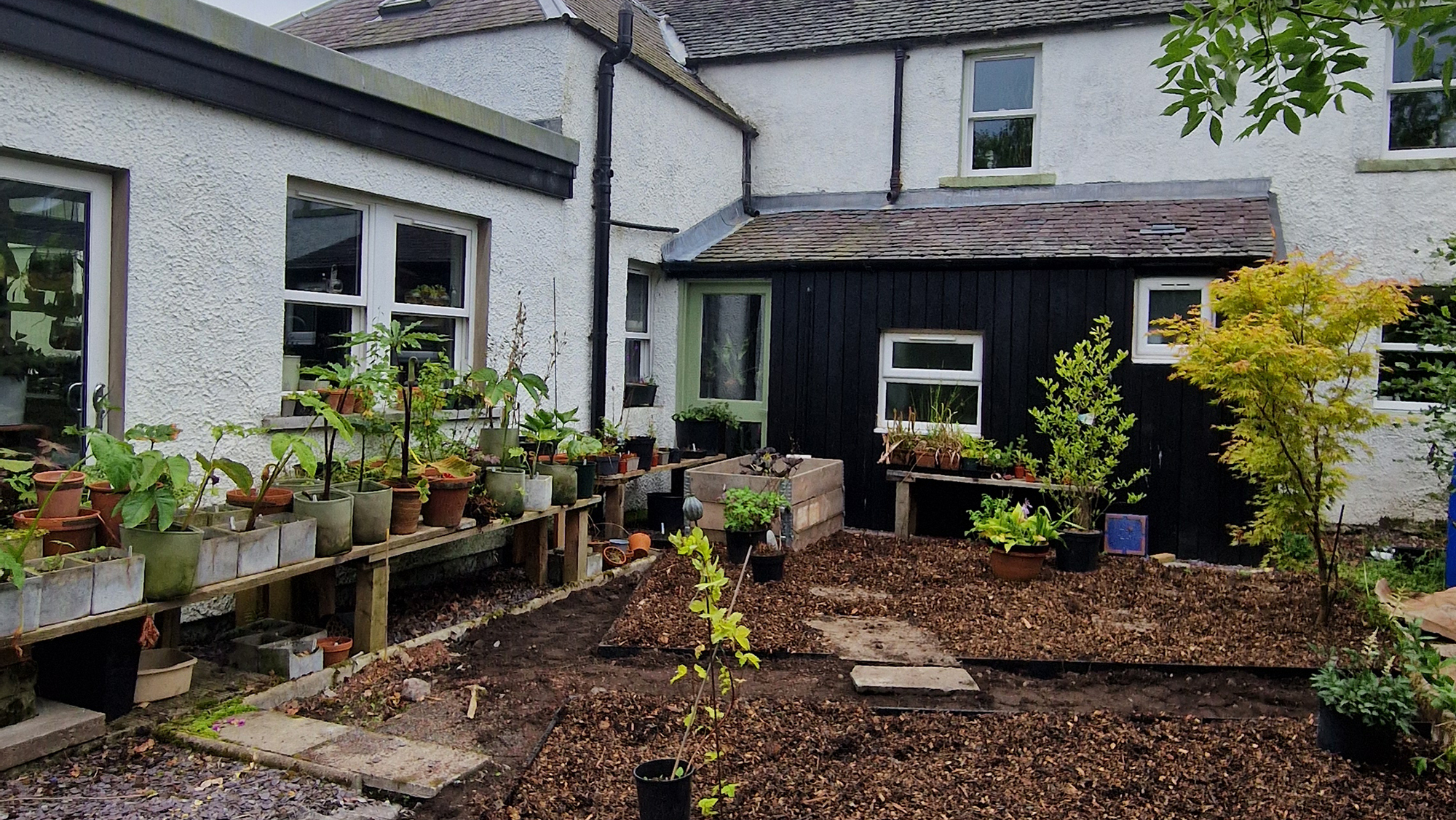
Boundaries
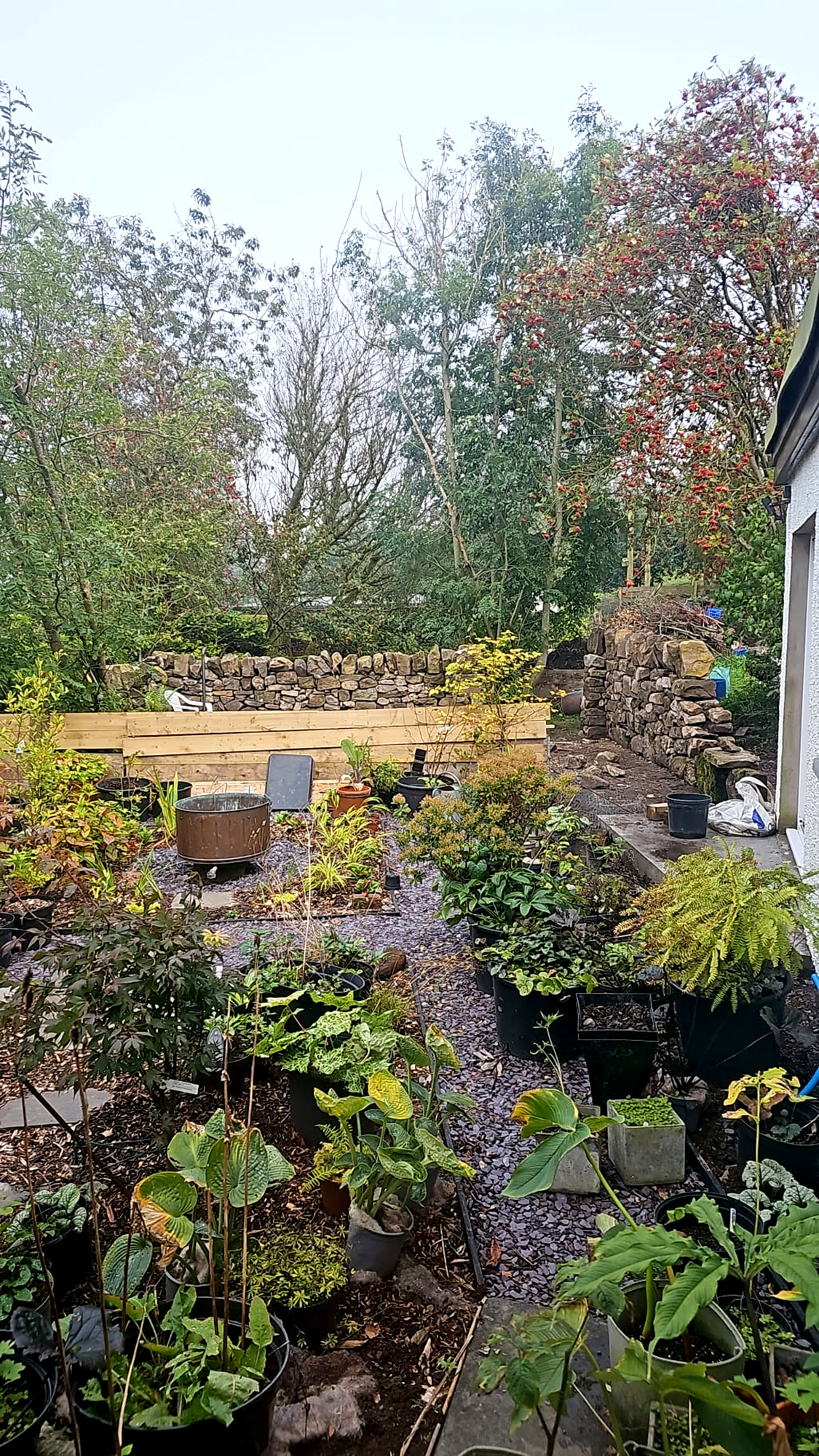
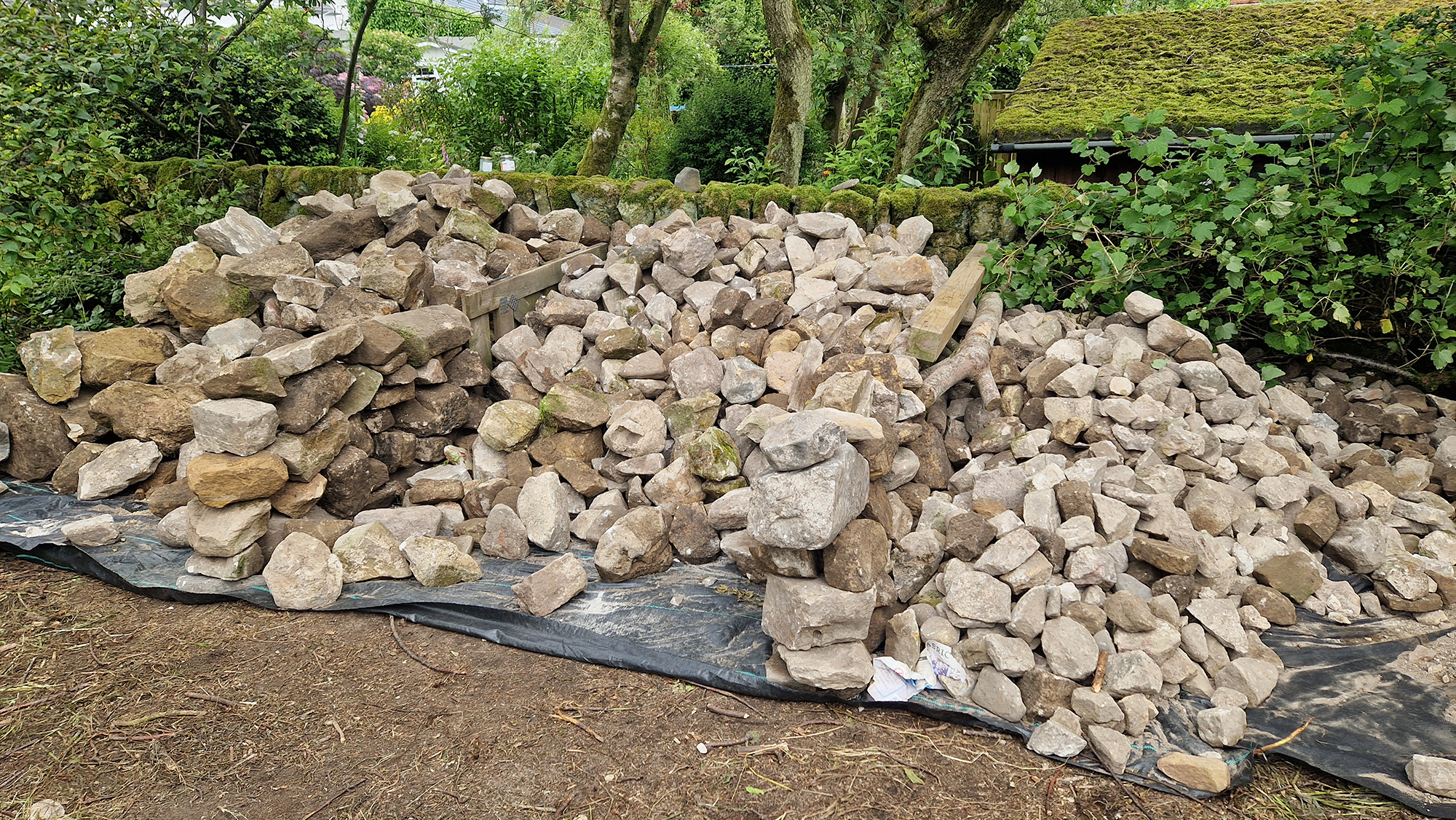
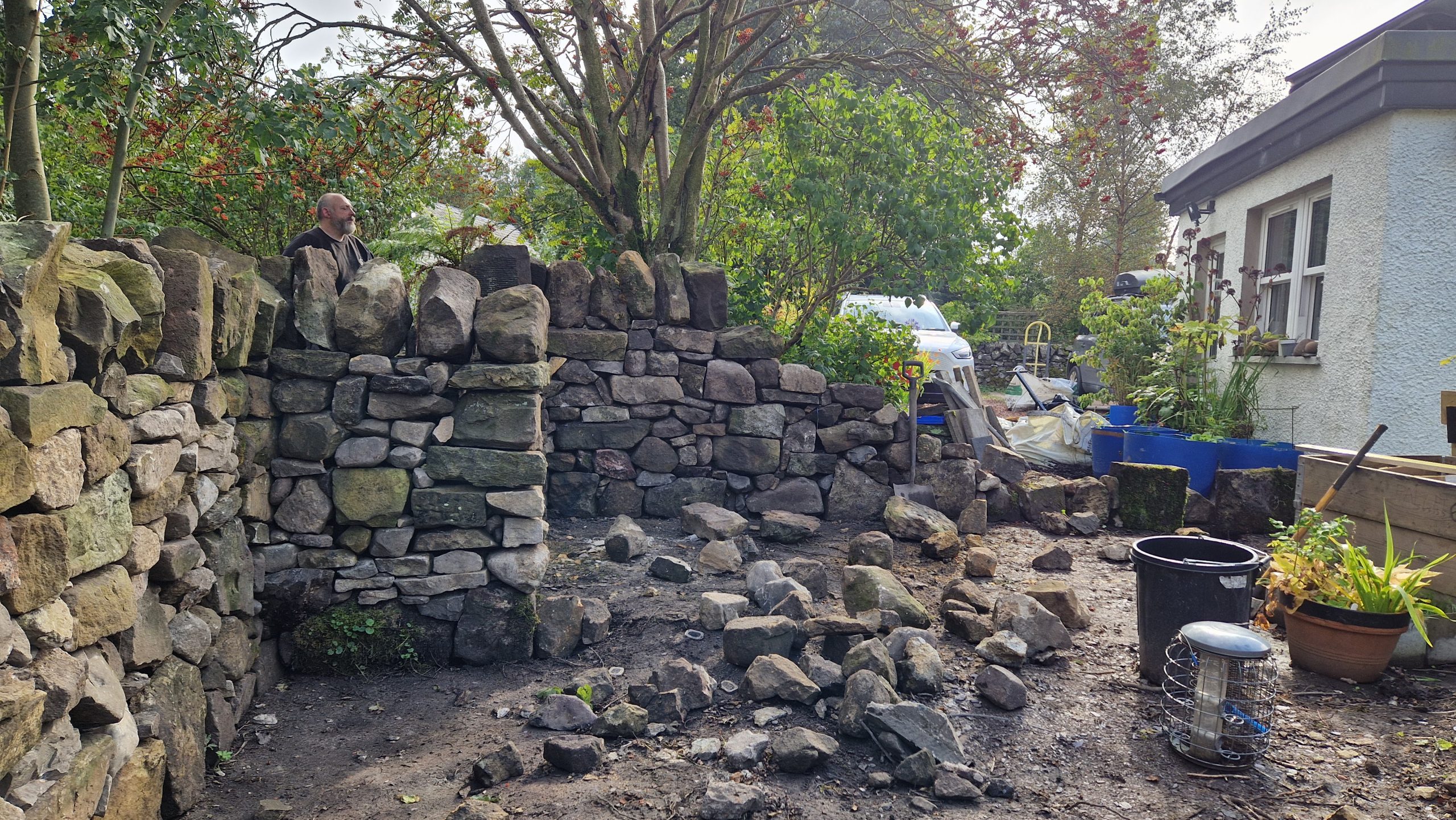
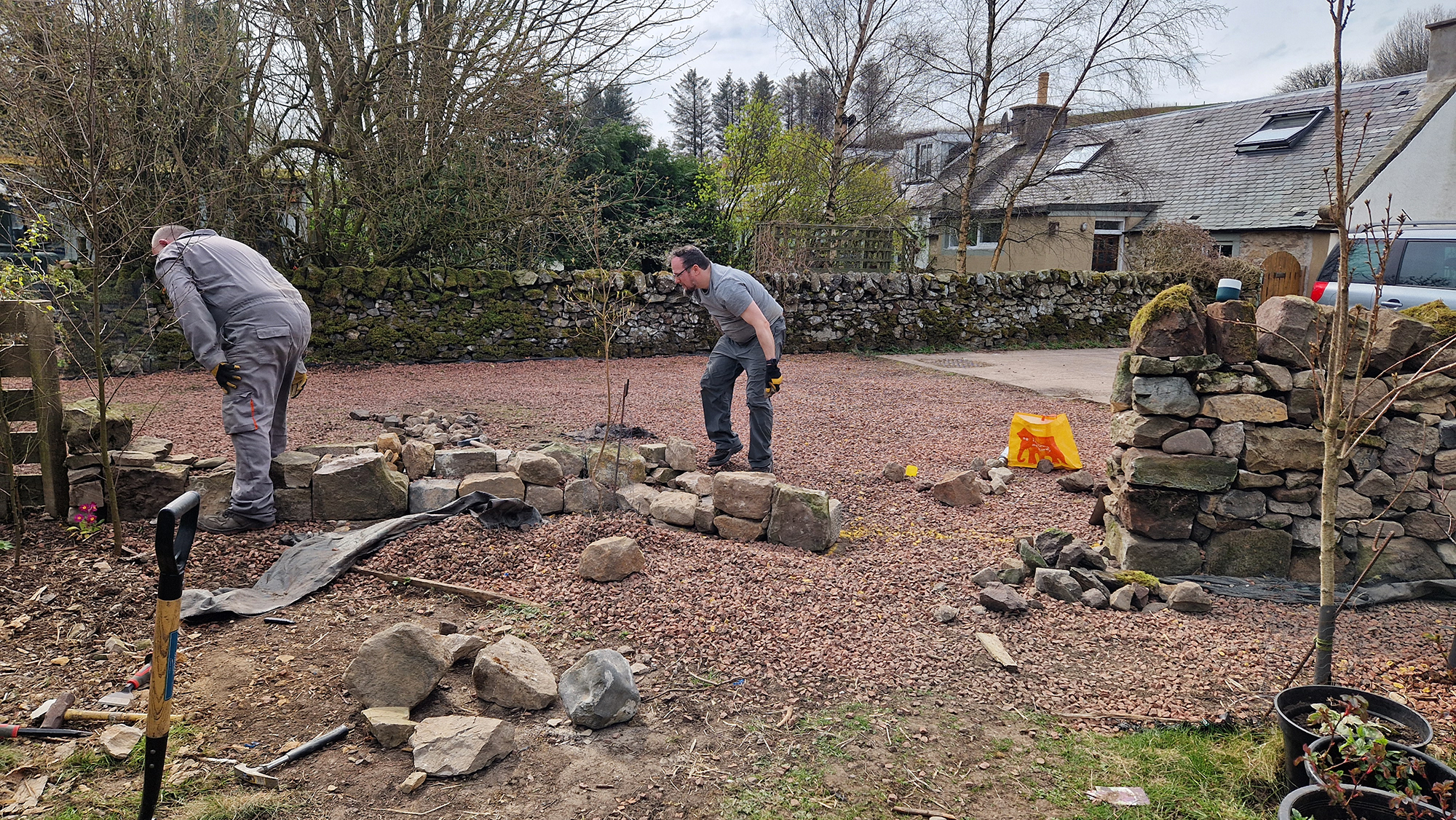
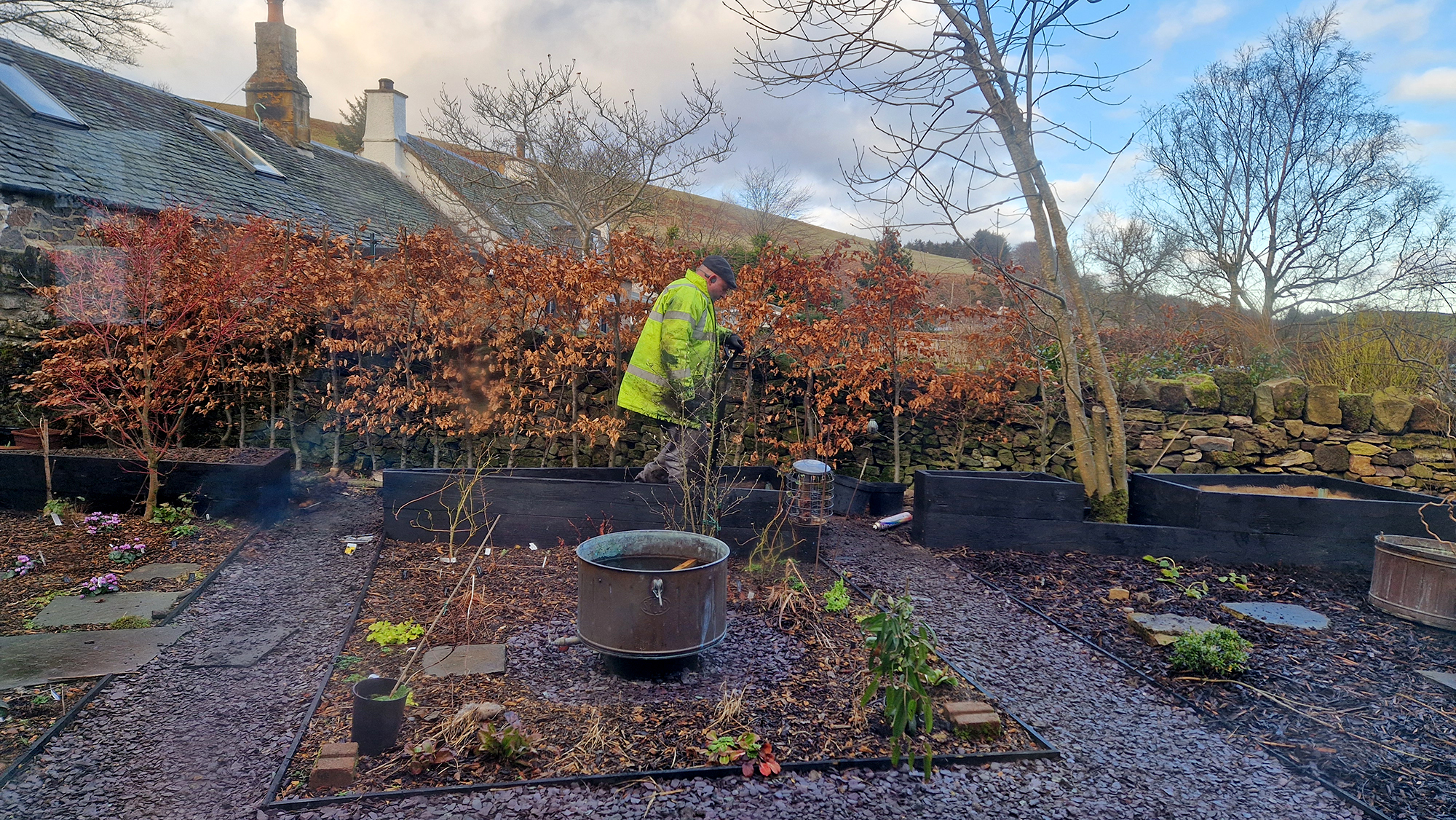
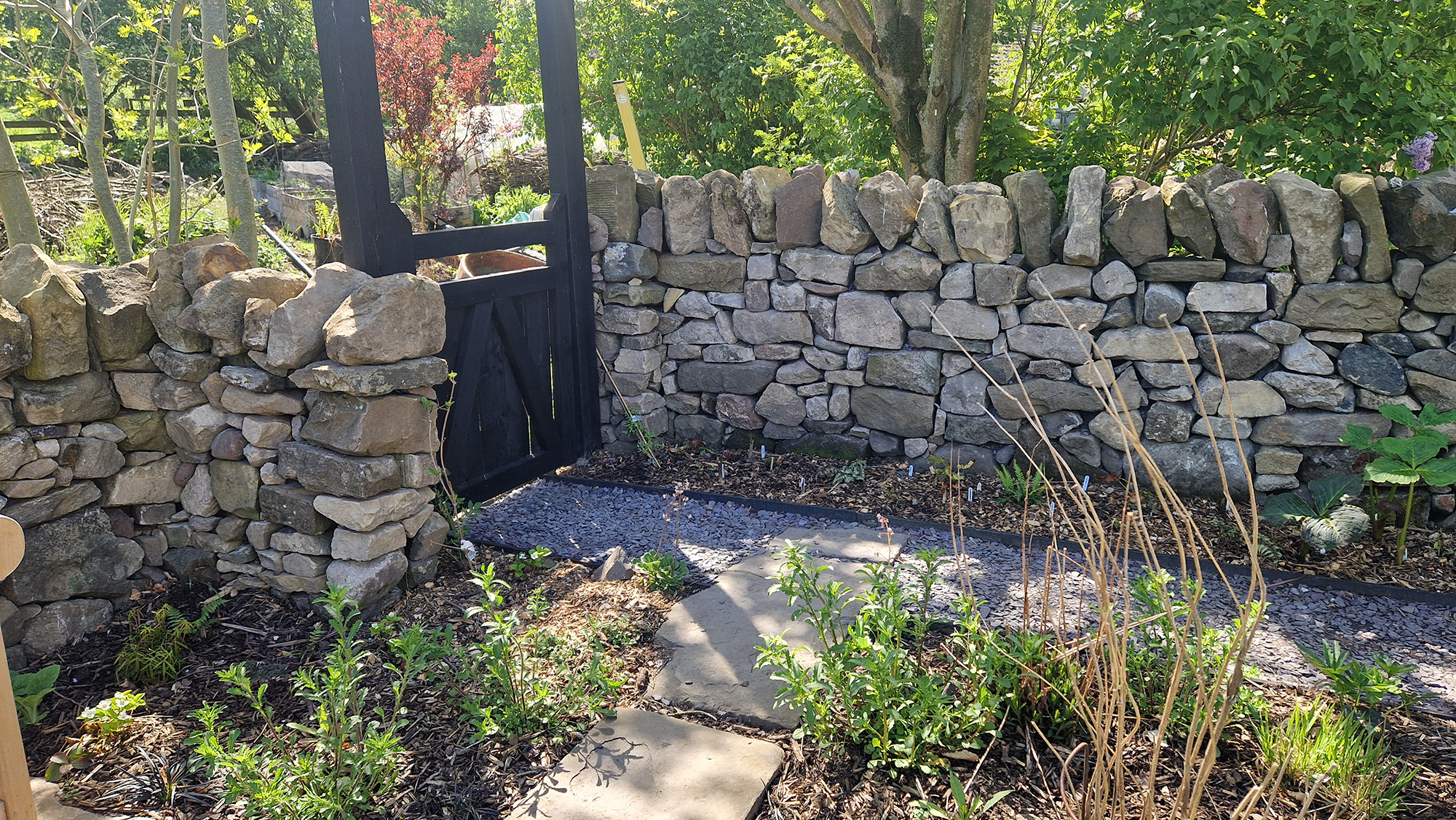
We still had to contend with the ever-increasing rabbit family… Initially, we boarded off the bits that we developed, but eventually, we needed a boundary. In his youth Alex earned pocket money helping to rebuild dry-stane walls in rural North Wales, so we had the skill-set, we needed the stone. Stone is expensive to transport, so we looked at local options, a garden designer friend let us have some stone that a client didn’t want, as long as we transported it, absolutely that was a long weekend of trips and lifting and carrying and placing down again, and then we found a builder who had left over stone from his build in West Linton. We bought about 15 tonnes of stone and then transported it in our wee trailer, tonne by tonne, and yes we lifted all of that stone into the trailer and then out again. We sorted it into large, medium and small, and Alex got to work on the walls. We discovered a frog family living in the stone pile, gently caught them and relocated them to neighbouring walls.
There was an existing bed along the boundary with a beech hedge on one side and Ground elder, Perineal cornflower, some Wild rocket, Spanish bluebells, and more Creeping buttercup. We didn’t really want those to encroach on our newly designed beds. We also needed to do something to create a planting area over the levelled sycamore stump, so we came up with a plan of raised beds dividing the back bed along the wall from our newly dug and filled beds, to try to keep on top of the spread of ground elder and buttercup, providing something to plant into over the sycamore stump. These were also offset and so were triangular.


Planting
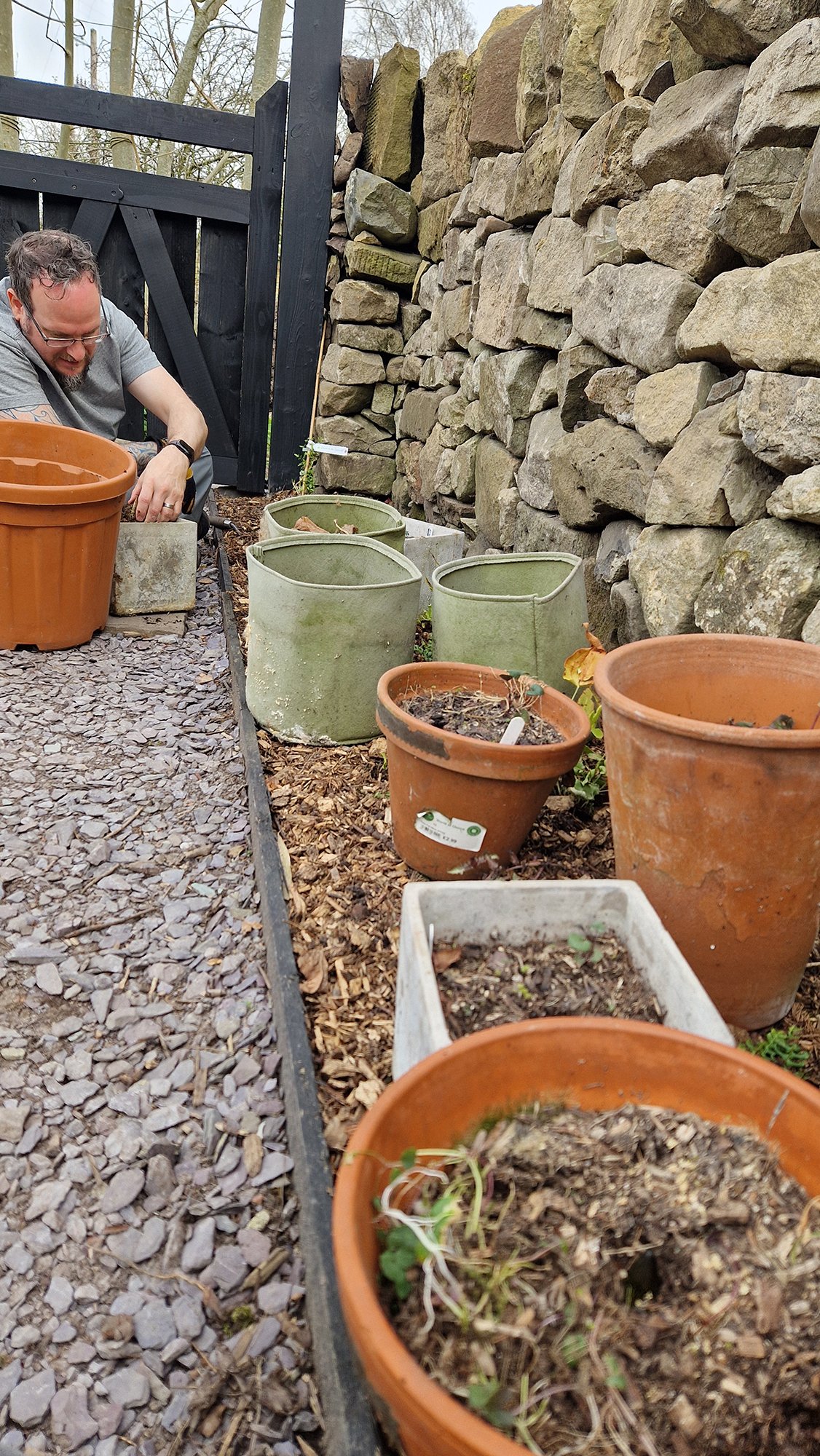
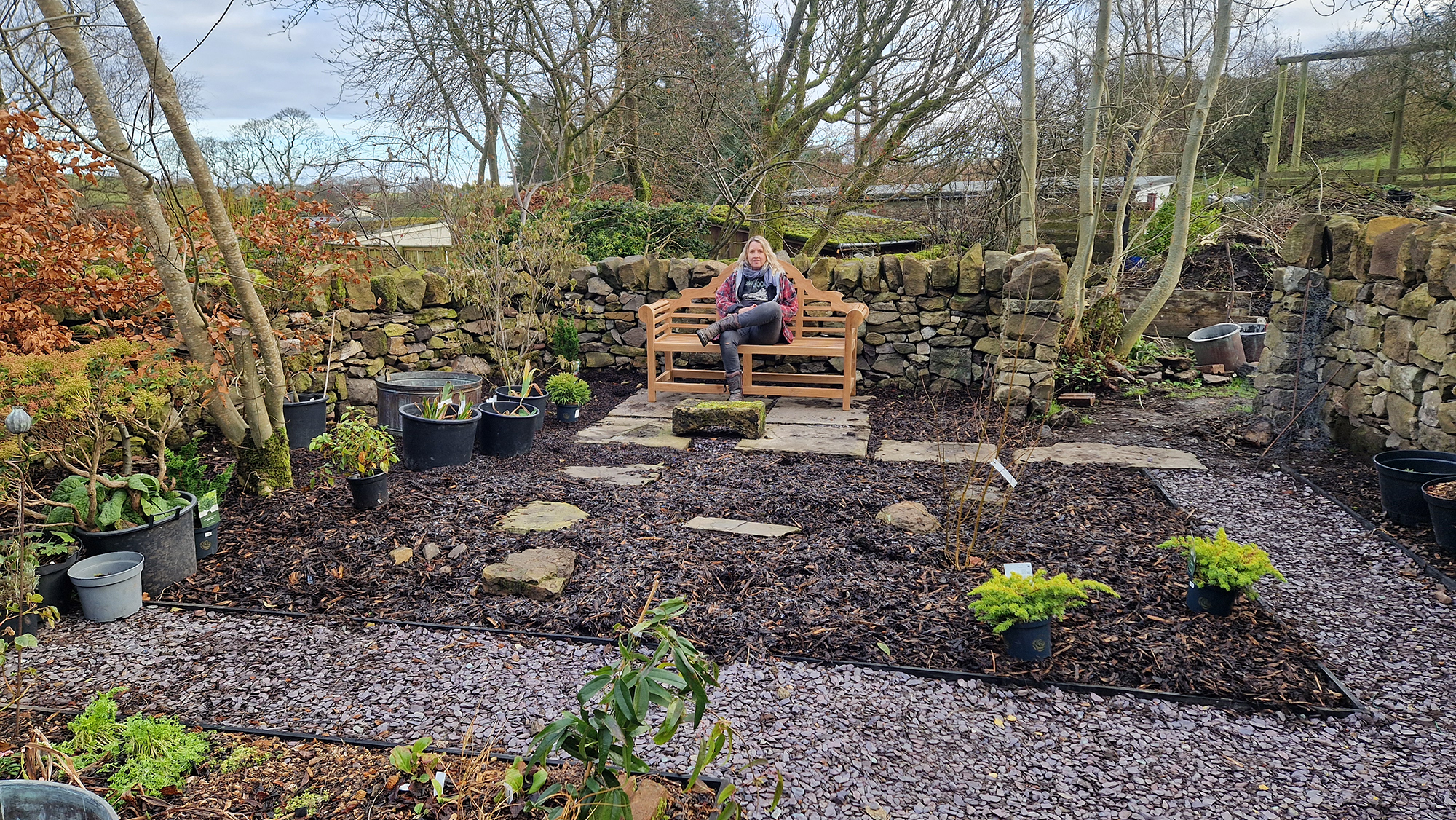
We started to plant up in August 2024, and have been planting through to last summer (2025) when I got really busy with work. During 2022 & 2023, I had been testing out plants in half blue barrels and the largest plastic pots I could find, borrowed from our neighbour at Kitleyknowe. These were liberally scattered around the garden, housing plants we had brought from our old place, and plants that we were given, and things we thought we would try out in advance, we grew a lot from seed and bought tiny plug plants as well. Planting out into the beds made such a difference. We brought in some topsoil, we used soil from our hill at the back, we got well-rotted manure from the local farmer and bark mulch, and our plants have just loved getting their feet in the ground!
I planted in too concentrated a way initially, so have moved things about over the last year or so as I’ve watched things spread out, but in general I’m really happy with most things. The clematis have not made it, so we will look for alternatives, but the hops were amazing, and the Ligularia, there is so much that I love coming up this spring, and I’m so excited to see what comes up again as we move into summer, its a feast that develops day by day.
What have I learned so far
Don’t buy plants until you have a space to put them.
Right plant, right place.
The higher altitude and wind are challenging.
It’s very hard to visualize the amount of space a plant will take up once it’s happy if you’ve not got experience with that plant.
It is very easy to puncture a pond liner.
Friends who offer to help, are fool hardy, but we love them, huge thanks to Darren, Marek & Alison 🙂 Also thanks to everyone who gave me plants, and to my mum for our bench xxx
This is our garden, but it is also a nursery space and testing ground for the rest of the garden, which is next…
